
Expert or not expert? Spot the difference?

It’s easy enough to define the role of an expert in court but given how often parties put forward ‘expert’ evidence that’s ruled out or discounted  we thought a list of recent cases involving ‘non-expert experts’ might be helpful to lawyers and clients alike. So here’s a list of the tip 5 give aways that the evidence involved is not in fact expert evidence;


  1. The expert isn’t an expert at all. In a case about the (incorrect) seizure of poppy heads by Border Force the Claimant tried to serve an analysis of the business loss written by his son. The judge concluded he had no relevant expertise, was not independent and there was already agreed expert evidence on the subject and refused permission to use it.


  1. The expert is the wrong kind of expert. In a case about psychological difficulties suffered as a result of a lack of Covid precautions the expertise required was about the medical foreseeability of psychological injury. The expert did not have, or profess to have, such expertise and their ‘general awareness of health and safety guidance’ simply wasn’t good enough.


  1. The expert doesn’t follow the rules. Many people have professional expertise but to give evidence in court they need to be aware of, and follow, the rules. In a case involving a Defendant’s failure to cooperate with a medical examination his GP gave rather colourful evidence about the process in a report that claimed to be compliant with Part 35. However, the GP concerned said that although he’d read Part 35 he hadn’t complied with it and had not referred to his letter of instruction. Unsurprisingly his evidence carried very little weight.


  1. The expert issue isn’t relevant. While pleadings can and do change ultimately the courts have to decide case on the pleaded issues. In an insolvency case an application to allow expert evidence on business valuation and restructuring was refused for “the simple reason the evidence will not go to any pleaded issue in the claim”.


  1. The expert is a judge! And finally, the Court of Appeal recently overturned a ruling where the judge had preferred his own personal ie non-expert view to that of an expert who had given uncontroverted evidence on the impact of the 1982 Hyde Park bombings on the daughter of one of the victims.

So to summarise, for expert evidence to be accepted it must be from an actual expert, with the correct expertise, by an expert who follows the rules and covers issues in front of the court and not from a judge. If you’re looking for a proper, qualified expert then TAE’s expert directory is the place to find one!

Consultation – Family Procedure Rules – Request for Input

In recent years a range of stakeholders have raised concerns regarding the standard of certain expert evidence relating to children in Family Law court cases.

These experts often use the title of psychologist and may be instructed to give evidence or offer diagnoses which they are not qualified to undertake.

The Family Procedure Rule Committee is now consulting on proposed changes to the Family Procedure Rules (FPR) and the associated Practice Directions (PD) for experts in family law children proceedings. These changes involve a requirement for an expert witness to be a ‘regulated expert’ which is defined in FPR 25.2.

The proposed definition of a regulated expert is set out as follows:

‘regulated expert’ means an expert who is:

  1. regulated by a UK statutory body; or
  2. a register accredited by the Professional Standards Authority for Health and Social Care; or
  3. regulated by an approved regulator under the Legal Services Act 2007.

This requirement would not apply to international social workers and the court would be able to give permission to any expert where there is no regulated expert available.

Consultation Questions

  1. Are there any experts not accounted for in the current draft of the amendments who you feel should be considered? If yes, why do you think they should be considered?
  2. Do you have any feedback on Rule 25.5A and the amendments to PD’s relating to the standards of experts, as currently drafted?
  3.  Are there any other comments you would wish to make regarding the instruction of unregulated experts?


The consultation is available here with responses due by 6 June 2025 at FPRCSecretariat@Justice.gov.uk.

TAE will be making a response to the Family Procedure Rule Committee. We would welcome your comments and input in the preparation of our response.

We would be grateful if any comments or suggestions to help frame the TAE response be sent to us not later than 15th May.

It was this big, really! Exaggeration has no place in expert evidence.

No sooner have we posted about experts doing their job efficiently, professionally and objectively than along come two judgements where the experts involved have very definitely not come up to scratch. Both experts were guilty of expanding and exaggerating their opinions to try to benefit of their client’s case.


In Morriss v London Borough of Hillingdon the cause of a motorbike accident was said by one expert to be the “the most dangerous site on a distributor road he had seen in his 55 years’ experience.”. This was a risky position to take given he’d not been able to examine the relevant stretches of road as they were at the time of the accident. The judge conclude that his evidence was “inappropriately partisan and exaggerated: the evidence concerning the collision site demonstrably showed it was not the extremely dangerous site that he characterised it to be, not least that there had never been a motorcycle accident there before: “


In Freeman & Ors v Home Farm Ellingham a planning expert took things even further. Not only did he give evidence outside the pleaded issues, which revolved around a loss of value in a plot of land,  he generated a set of plans for a development that had never been contemplated, orchestrating, as the judge explained, the production of “what appears to be factual evidence, but that evidence was entirely self-generated by him, and his firm.” That somewhat cavalier approach may explain why in court he appears to have found it difficult to accept instructions from the judge, who records that he “insisted on answering questions that he had himself posed even when asked by the court not to.” and on one occasion ignored an instruction from  the judge not to elaborate on what should have been a simple yes or no answer.


In the motorbike case the evidence of an expert with a great deal of experience was in the end valueless and the planning experts evidence was ruled inadmissible (or alternatively given no weight). The moral for lawyers and clients is that expert opinions that fall too heavily on your side should be related with suspicion, if they are not credible it will be obvious in court and end costing you money and very probably your case.

Only common sense? Experts should not provide unecessary evidence on common sense issues

Only common sense? Now may not be the best time to refer to Thomas Paine’s advice to Americans that they should seek independence from Britain, but a keen understanding of what common sense means is important for an expert.

It’s trite to say that experts are there to assist the court on matters within their expertise but it tends to irritate judges if experts provide opinions that tell them what they already know. If you’re being asked to give opinions about matters that are really common sense it’s important to stop and consider if this is really necessary.

In some recent cases a good deal of time, and client’s money, seems to have been spent on expert evidence that really wasn’t needed. As Meade J observed in a patent case involving Motorola and Ericsson, “The experts gave their evidence very fairly and it was not submitted to the contrary. However, with a few exceptions, and this is not the fault of the experts themselves, I found the expert evidence unhelpful and a waste of time. For example, questions were asked to establish that companies in this field like certainty if they can get it, and that patent injunctions are bad for handset manufacturers. I did not need experts to tell me this. “

Similarly in an inheritance tax hearing the Tribunal considered that expert advice on the running of a property business did not assist them, “this is not an area where particular specialist expertise and experience is required to understand the evidence given by those involved in the business.”

Experts and lawyers should take care to avoid wasting time in this way and experts in particular should remember that an irritated judge is unlikely to be of benefit to them or their client.

Show your working. Judges prefer orderly reasoning to leaps of faith

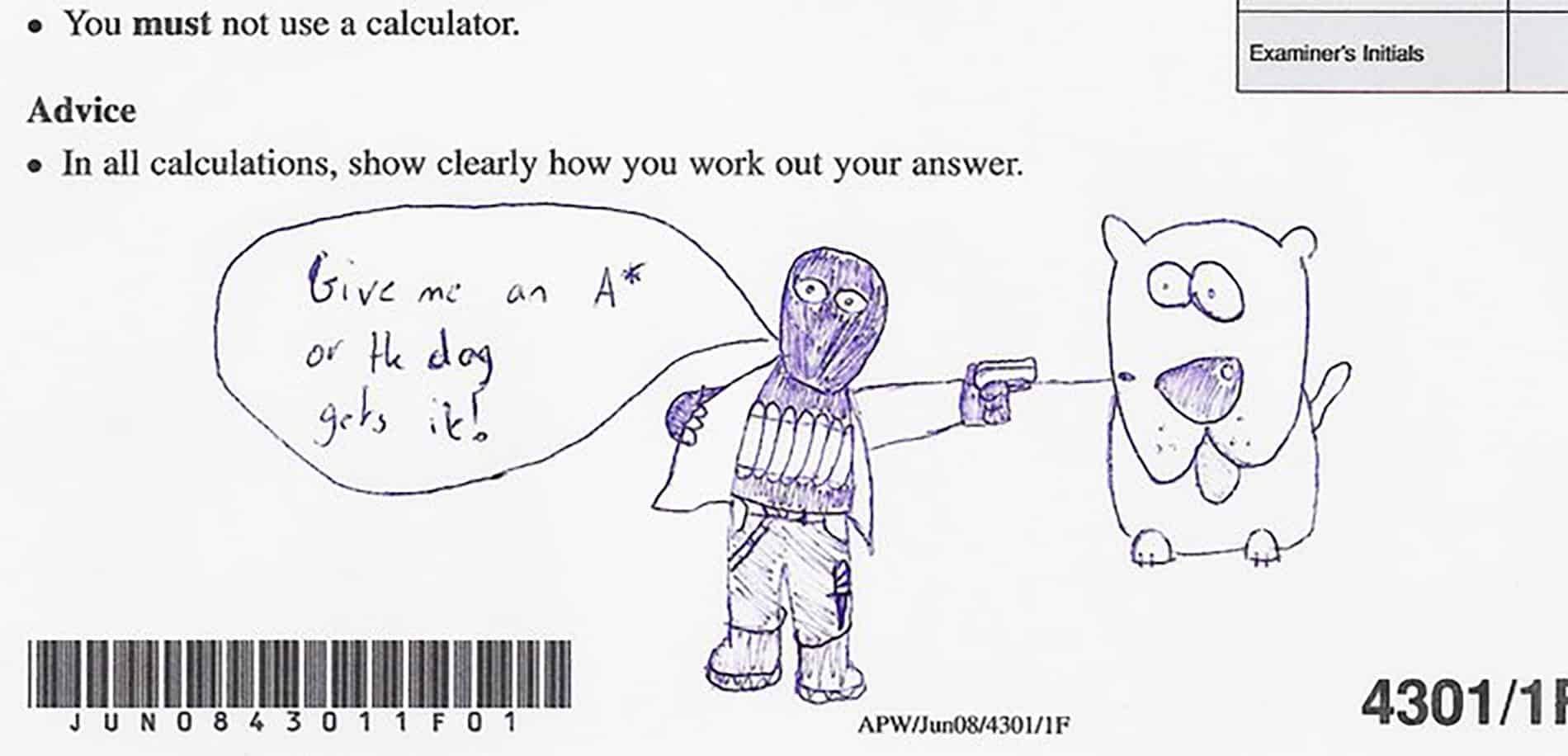
Many of us will remember being instructed to show our working in Math exams in the hope of garnering at least some marks for our work even if the eventual answer was way off beam. Simply giving the answer runs the risk of all credit being lost even if its only wrong because of a tiny arithmetical slip.

The same approach is essential for experts, while the courts take note of qualifications and experience in assessing  expert evidence the acid test is whether an expert’s approach to providing an opinion stands up to scrutiny. If the court cannot understand your method then they will be less inclined to take a leap of faith in accepting your answers.

A recent example (Port of Sheerness Ltd v Swire Shipping PTE) involved two experts asked to estimate how long it would take to remove a cargo of plywood from a ship so that the cost of an extended stay in port could be calculated. The judge commented that “The experts were both impressive and well-qualified witnesses. The difference between them was derived from the methodology they employed. Mr Pope employed what I might call a “time and motion” model in which he broke the discharging operation down into its constituent elements and expected durations, making allowance for variable factors. Mr Daniells employed a more general approach based upon experience. “

Despite attempts to criticise the more detailed  approach the answer it gave was closer to contemporaneous estimates and the judge was not persuaded to accept the much higher estimate that was based on a method that was “definitely not a science”. The detailed method had the added benefit of allowing the judge to make a modest adjustment based on issues that emerged during the hearing.

For information and advice on what a expert report should cover see https://academyofexperts.org/users-of-experts/what-is-an-expert-report/

Our picture is from LiberationMath


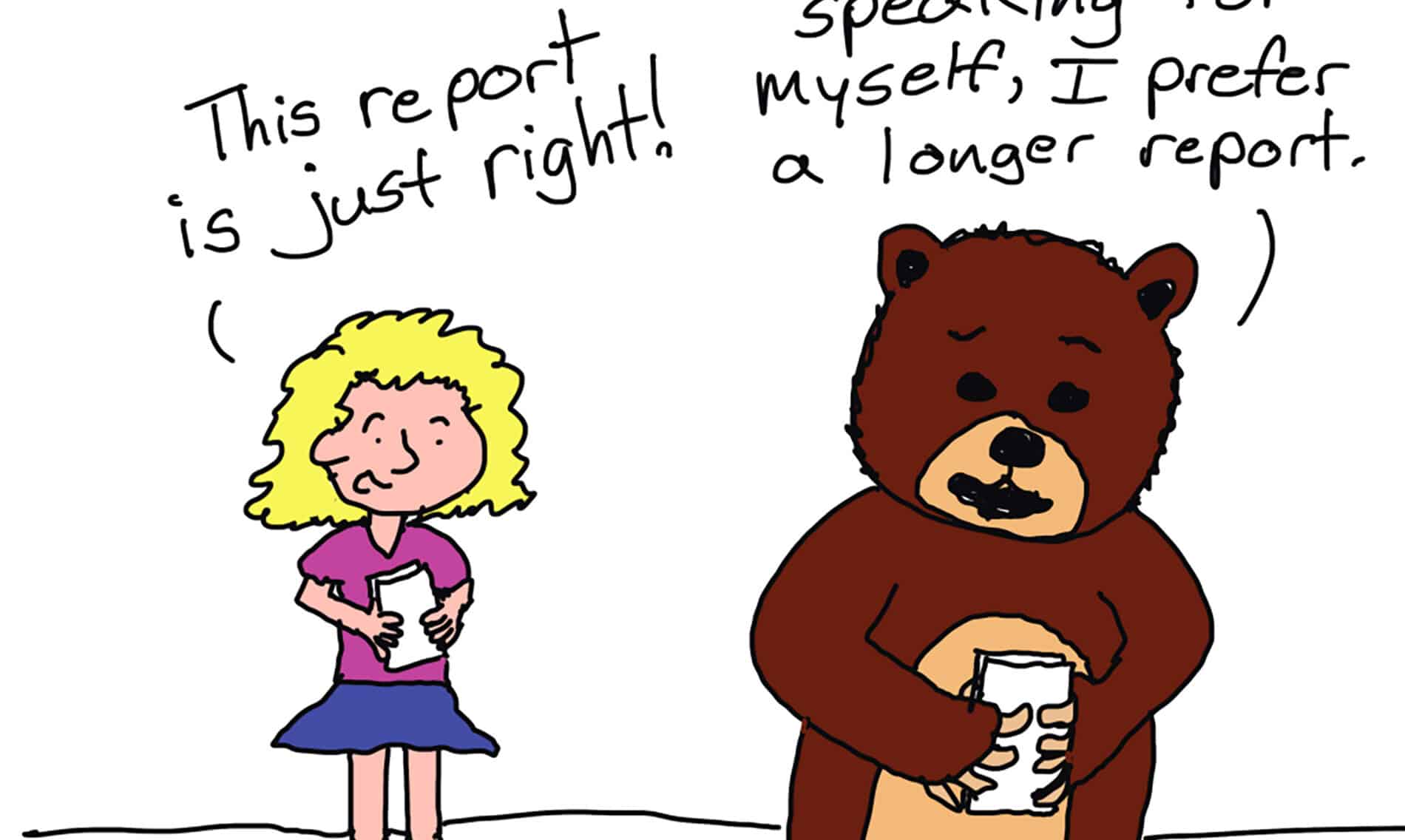
Goldilocks expert reports? How to make your report just right.

Goldilocks expert reports?  A recent write up on reports in a non-expert context (https://freshspectrum.com/goldilocks/) suggested that there’s no such thing and that authors should create different reports for different audiences. But an expert is only allowed to produce one report so how can that best be achieved?

A report that’s too brief is unlikely to help and in extreme cases such as Jukic v BBC Anor [2025] https://www.bailii.org/cgi-bin/format.cgi?doc=/ew/cases/EWHC/Ch/2025/221.html , where an expert report was said to exist but like the claimant (and MacAvity perhaps, simply ‘wasn’t there’ judges have no choices but to make do without expert opinion.

In a complex Australian case (ASIC v Money3 Loans [2025] http://www.austlii.edu.au/cgi-bin/viewdoc/au/cases/cth/FCA/2025/75.html ) involving consumer lending practise where the judge remarked that “It takes a good deal of persistence to read the Expert Report, which obviously I have.”  an experts report was challenged despite its length for lacking a clear factual matrix supporting the opinions it contained. The report was admitted but a more concise but properly underpinned report might well have saved time and cost.

Clearly too short and too long can both be problematic, but a recent judgement highlights what judges really need. In a sad case involving the treatment of an individual in custody there were two eminent and experienced experts involved but their evidence focused on different aspects of the case. One centred on the individual’s previous mental health history and treatment whereas the other focused on how they had presented to the police and others while under their supervision. Ultimately the issue the judge had to decide was whether they should have been treated differently in custody and their presentation at the time was what mattered, so  an expert analysis of their pervious history was of little or no help to the court.

Dobson v Chief Constable of Leicestershire Police [2025]

https://www.bailii.org/cgi-bin/format.cgi?doc=/ew/cases/EWHC/KB/2025/272.html

All of which highlights the need for experts to focus on the issues the court has been asked to decide. For more help on writing expert reports TAE provides regular training courses and a Model Form of Report aimed at helping experts do just that.

https://academyofexperts.org/practising-as-expert/model-form-of-report/#page_content

Chairman’s Lunch 2025

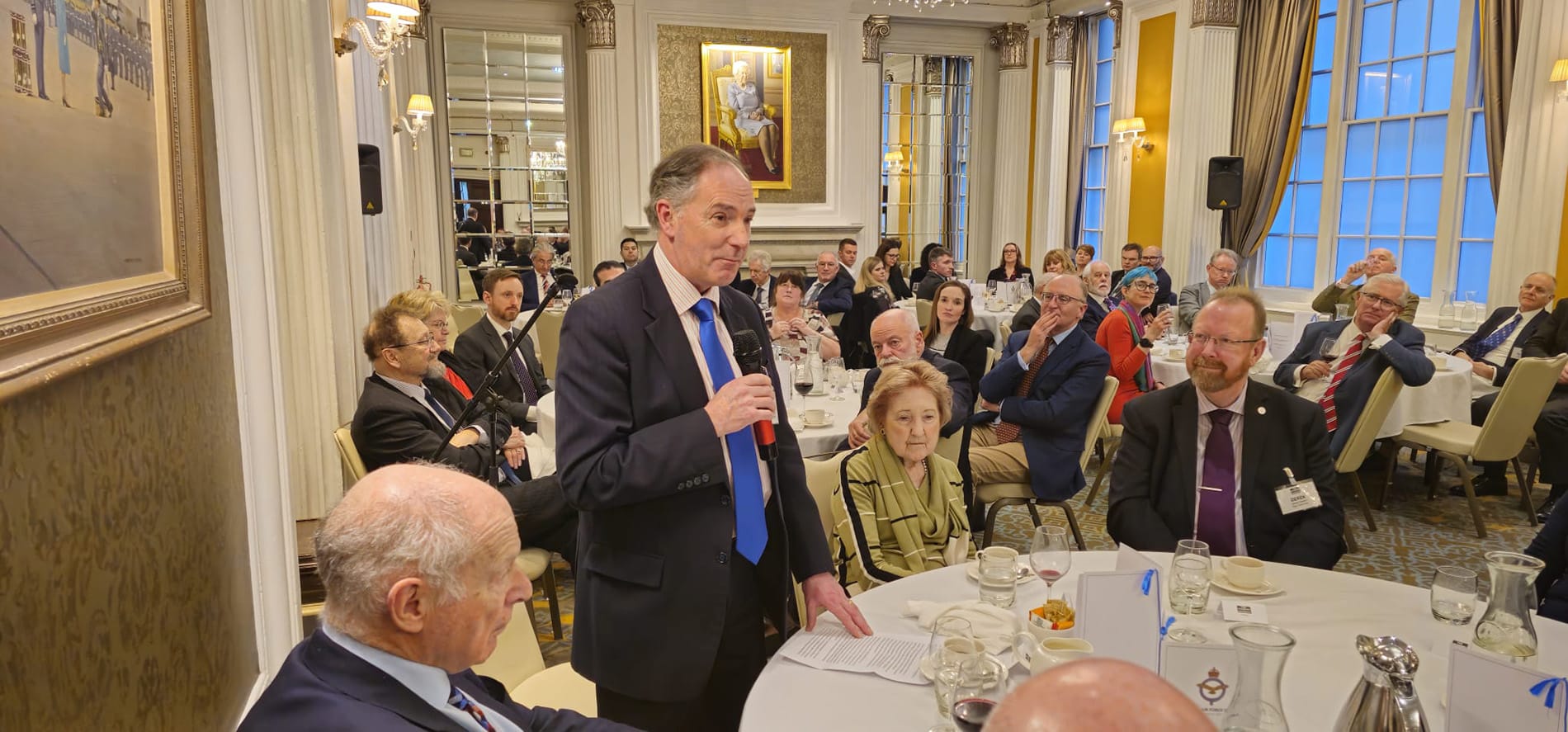
Great to see so many members at our Chairman’s Lunch to hear Lord Neuberger thank outgoing Chairman Ben Johnson and welcome our new Chairman William Hooper.

Member also enjoyed an entertaining and informative seminar from  Aileen Brown of CMS. Aileen  first reviewed general trends in the courts’ attitudes to expert evidence, noting a trend towards the acceptance of blurred boundaries between factual evidence and opinion, and who presents what. The courts have also shut-down inappropriate attacks from advocates on the credibility of experts.

She proceeded to review cases illustrating very fact-specific occasions on which experts may decide matters of fact. An expert who presented what was seen as legal argument dressed up as expert opinion fared less well. Other cases reminded attendees of the importance of compliance to Part 35, such as showing calculations and citing tests in full. A US case showed that an expert using AI in drafting a report may be criticised if unable to show they have verified their statements appropriately.

We hope you all enjoyed it and made new contacts and refreshed old ones.

Our next member event is an online session on Conflicts from Hamish Lal on 18th February.

https://academyofexperts.org/events/conflicts-of-interests-hamish-lal/

The importance of appropriate expert instructions

Need better instructions?  A warning to lawyers that poor instructions to an expert can lead to unnecessary costs has been given in a recent decision by the Court of Session in Scotland. This is a case involving allegations of misconduct by police investigating a complaint of stalking where the defendants asked for an expert’s report to be struck out as inadmissible. Their first argument was that the expert did not have appropriate expertise because his background was in English rather than Scottish policing, but this was not accepted, not least because the expert had extensive experience and had taken care to reference the appropriate Scottish procedures in his report.

However, under instructions, he had crossed the line in many places in his report from opining on appropriate police conduct to inferring the cause of that conduct, notably ‘malice’ from the evidence. The judge was clear that such findings are highly fact dependent and matters for the court and not an expert. As he said “While I have not excluded the report from probation in its entirety, a redacted version leaving only the passages which can remain would not be as easy to follow. It would plainly be much more sensible and appropriate for a revised report to be prepared, which can seek to include any parts of the current report that do not go beyond the limits of expert evidence. “.

It would obviously have been much better for both parties if the report had been prepared in that way from the outset, making this a useful example for experts who feel they are being asked to go too far. More guidance for lawyers instructing experts is available at https://academyofexperts.org/users-of-experts/instructing-an-expert/

(our feature image is taken from  https://www.scottish-country-dancing-dictionary.com/dance-crib/bluebells-of-scotland.html )

Ikarian Reefer

To kick off 2025 we’re starting a new series of posts about terms and expression used by lawyers that can leave the new expert rather baffled. You may well hear references to the Ikarian Reefer bandied around and wonder what on earth that has to do with medicine, construction, accountancy or science.

On 12 April 1985 a ship called The Ikarian Reefer ran aground on shoals. There was subsequently a court case heard by Mr Justice Cresswell (as he was then). He found some of the evidence presented to him to be unsatisfactory and established principles in his judgement for expert evidence. Essentially he laid out that expert evidence should be

1. independent, uninfluenced, objective and unbiased

2. within the individual’s expertise, with any questions falling beyond that clearly identified

These later formed the basis of the UK civil procedure rules (and others). For more information on the role of an expert see https://academyofexperts.org/practising-as-expert/

(our image is from http://shipspotting.com)

Contact Us