
When the expert becomes part of the problem: The King v ZX and the limits of expert independence

How often do you see an expert witness themself become part of the reason a criminal conviction is overturned?

That is, in effect, what happened in The King v ZX [2025] NICA 76, a decision of the Court of Appeal in Northern Ireland concerning convictions for murder and attempted murder.

Psychiatric evidence was central to the trial. The defendant’s mental state was directly relevant to the issues the jury had to decide, and both the prosecution and defence relied on psychiatric experts.

What makes the case particularly striking is not simply that the Court of Appeal disagreed with an expert’s opinion. Courts do that all the time. The problem went much deeper. The court concluded that the prosecution psychiatrist’s evidence had evolved in such a way that it could no longer be regarded as the independent product of an expert uninfluenced by the demands of the litigation.

The expert had, in the court’s words, effectively assumed an impermissible role in promoting the prosecution case.

That is an unusually serious finding against any expert witness.

An opinion which developed during the trial

Before trial, the prosecution psychiatrist had assessed the defendant as suffering from depression, although not to the degree suggested by the defence expert. During his oral evidence, however, he introduced a much more significant proposition: that the most likely explanation for what had happened was “spousal revenge”.

That theory had not appeared in his reports or his contemporaneous notes. It emerged in evidence after the expert had been provided with research material addressing that subject by prosecution counsel.

There were other examples of important matters appearing for the first time at trial. The expert placed weight on the condition of the defendant’s home as an indicator against severe depression, although that had not featured in his reports or notes. He also relied on the severity of her self-inflicted injuries in a way which had not previously been identified.

Experts are, of course, allowed to change their opinions. New information may emerge or further consideration may lead to a different conclusion. But a material change of view should be identified and communicated. A party should not discover an important new expert opinion for the first time when the expert is giving evidence.

That principle was central to the Court of Appeal’s reasoning.

A quotation which changed meaning

Perhaps the most uncomfortable factual detail concerned a quotation attributed to the defendant.

The expert’s report recorded her as saying:

“he destroyed my life, so I destroyed his”

When the expert’s original handwritten notes were eventually disclosed during the trial, however, they recorded only:

“he destroyed my life”

There was also a discrepancy about when the statement was said to have been made.

The difference is obvious. Adding the second half of the sentence changes a statement about what had happened to the defendant into something which appears retaliatory. That was particularly significant given the later emergence of the “spousal revenge” theory.

The court recorded that, when challenged in cross-examination, the expert at one stage agreed that he had lied about what had been said, although he later resiled from that position.

Whatever the explanation, it illustrates why an expert’s original notes can matter just as much as the final report.

Material which had not been considered

The problems were not confined to the development of new theories.

The expert accepted that he had not considered police body-worn footage, had not asked to see it and had not regarded it as part of his assessment. He had also failed accurately to record when, and to what extent, the defendant had received antidepressant medication. When these omissions were put to him, he maintained that they did not alter his opinion.

That poses a familiar problem for experts. A conclusion may ultimately remain the same after additional material is considered, but that is different from never having considered the material in the first place.

An expert needs to be able to explain not only the conclusion reached but the evidential basis on which it was reached, including material which points in the other direction.

The relationship between the expert and the legal team

The Court of Appeal was also highly critical of the way in which the prosecution expert had been handled.

Before giving evidence, the expert had a telephone conversation with prosecution counsel lasting between approximately 45 minutes and an hour. Neither participant made a note or record of the conversation. A further meeting took place on the day the expert began giving evidence.

The concern was not simply that discussions had taken place. Conferences between lawyers and experts are normal and often essential. The difficulty was what happened afterwards.

The court noted that matters raised during the consultation subsequently became prominent in the expert’s evidence and increasingly supportive of the developing prosecution case. It said this gave rise to an appearance of coaching or of the expert having been consciously or subconsciously influenced.

Importantly, the court did not make a finding of deliberate coaching, but it did find that the prosecution’s conduct had fallen below recognised standards of good practice.

There is a useful distinction here. Lawyers are entitled to test an expert’s opinion, challenge assumptions, ask questions and introduce new material. What they cannot properly do is shape the expert’s evidence into the case they want to present.

The expert has the corresponding responsibility to resist that process.

No written letter of instruction

Remarkably, the prosecution psychiatrist had no written letter of instruction.

The Public Prosecution Service explained that he had been given a brief verbal explanation of the case, but nothing had been put in writing.

The Court of Appeal’s response was blunt. It described that as “patently not good enough”, said that the practice lacked transparency and stated that in future experts in criminal cases should have a written letter of instruction.

For experts used to civil litigation, that may sound like an obvious requirement. But the reason for it goes beyond administration.

Written instructions establish what the expert was originally asked to consider. They help define the issues, provide a record of the material supplied and make it possible later to see how and why an opinion developed.

Without that starting point, it becomes much harder to distinguish independent analysis from a case theory which may have developed through conversations with the instructing team.

The court’s conclusion on independence

The Court of Appeal returned to well-established principles governing expert witnesses.

Expert evidence should be the independent product of the expert. An expert should provide objective and unbiased assistance to the court, should identify the facts and assumptions supporting an opinion, should not omit material facts which detract from it and should communicate any material change of view promptly.

Applying those principles, the court concluded that the prosecution psychiatrist had departed significantly from his role as an independent expert and had effectively assumed an impermissible role promoting the prosecution case.

The consequences were serious.

The court said that without the perseverance of defence counsel in obtaining the expert’s notes and examining his dealings with prosecution counsel, there was a real possibility that the deficiencies and partiality in the evidence would never have been exposed. It said that this could have led to a miscarriage of justice.

The ground of appeal relating to the expert evidence succeeded.

The responsibility did not stop with the expert

It would nevertheless be wrong to treat ZX simply as a case about an expert who lost his independence.

The Court of Appeal also found serious problems in the conduct of the prosecution and in the way the trial judge dealt with the difficulties once they had emerged.

The prosecution’s handling of the expert was criticised, including the informal nature of the instructions, delayed disclosure and the interaction between counsel and the expert. The ground of appeal relating to prosecutorial misconduct also succeeded.

The court also found that the trial judge had failed to give sufficient consideration to applications to discharge the jury. It concluded that the jury could easily have been misled by the expert evidence and that directions could not have cured the resulting prejudice.

Both convictions were quashed.

The court’s overall conclusion was that the serious errors began with the prosecution’s misconduct and were compounded by the expert witness and the judge.

Could a new expert start again?

There is one final aspect of the case which is particularly interesting for anyone involved in expert evidence.

Once the convictions had been quashed, the court had to consider whether a retrial could take place. One difficulty was that the “spousal revenge” theory had by then become embedded in the case papers.

The Court of Appeal was concerned that any new expert might themselves be influenced by that history simply by reading the existing material. It described the risk of the replacement expert becoming “contaminated”.

When a retrial was eventually ordered, the court directed that the new expert’s letter of instruction should, so far as possible, be prepared on a “blank page basis”.

That is perhaps one of the most thought-provoking parts of the judgment.

Expert independence is not only about resisting pressure from the party instructing you. It also means being alert to the way in which the material provided to you can frame the problem before you have even begun your own analysis.

Independence can be lost gradually

Most experts know that their duty is to the court rather than to the person paying their fees. It is one of the first principles of expert witness work.

What ZX demonstrates rather starkly is how independence can be eroded without there necessarily being one obvious moment when the line is crossed.

A discussion takes place. A new theory is raised. A piece of research is introduced. Something which seemed insignificant in the report becomes central in oral evidence. Material which does not fit the emerging theory receives less attention. Gradually, the expert stops simply assisting the court and begins to move with the case being advanced by one side.

That is why the disciplines around expert evidence matter: clear written instructions, complete records, contemporaneous notes, proper disclosure, transparency about changes of opinion and a willingness to consider evidence which does not support the preferred conclusion.

None of those things is glamorous. They are, however, part of what keeps an expert independent.

In ZX, their absence contributed to something very unusual indeed: the expert’s own conduct became part of the reason two criminal convictions could not safely stand.

Case: The King v ZX [2025] NICA 76, Court of Appeal in Northern Ireland.

Read the judgment

When should an expert be brought into a dispute?

A 2026 CIArb report on party-appointed expert witnesses in international arbitration suggests that experts are often brought into disputes later than they should be. The findings are about arbitration, but many of the issues will be familiar to those involved in conventional litigation as well.

Party-Appointed Expert Witnesses in International Arbitration: Effectiveness and Best Practice draws on 419 responses from expert witnesses, arbitrators, external counsel and in-house counsel, together with consultation across common law and civil law jurisdictions. One of its central themes is the timing of expert involvement. Some 71% of respondents thought that, ideally, experts should be appointed before the arbitration itself had begun: 42% once the issues between the parties were known or had crystallised and 29% before a claim was made.

The figures become more interesting when the responses of experts are compared with those of the people instructing them. Only 44% of expert witnesses thought they were typically given enough time to carry out their work. External counsel were considerably more optimistic at 66%, arbitrators at 77% and in-house counsel at 80%. Some 60% of the experts also thought they should have an opportunity to comment directly on the procedural timetable when it is being set.

There was a similar difference of view about why experts are instructed late. Among experts, 42% identified a lack of understanding of the expert’s role and 39% identified cost. External counsel saw cost as the principal problem, at 53%, while only 13% thought lack of understanding of the expert’s role was the main reason.

Those figures come from international arbitration, but the underlying question is wider: are we sometimes concentrating too much on the date by which the expert report is needed, rather than the point at which the expert might usefully become involved?

What can an expert add before the report is due?

Bringing an expert in earlier does not necessarily mean commissioning a full report earlier. There is useful work which may need to happen long before anybody starts drafting one.

An expert may be able to identify whether the technical question being posed is actually the right one, what evidence or data will be needed to answer it, whether important material is missing and whether the proposed timetable bears any relation to the work required. In some disputes the expert may also be able to test whether a claim or defence which looks attractive in legal terms works when the underlying technical, scientific or financial assumptions are examined.

The CIArb report identifies early involvement as potentially helping to test the viability of claims, clarify technical issues, narrow areas of disagreement and inform procedural planning. It also raises the practical difficulty of experts being presented with a timetable once it has already been agreed and then being expected to work within it.

This can become particularly important where several disciplines depend upon one another. A quantum expert, for example, may need findings or opinions from an engineering or delay expert before parts of the quantum analysis can sensibly be completed. If those dependencies are only discovered after individual report deadlines have been fixed, somebody is likely either to duplicate work or to run out of time.

The same issue arises in litigation

In England and Wales, CPR Part 35 requires a party seeking permission for expert evidence to identify the field in which the evidence is required and the issues which it will address. Where practicable, the proposed expert must also be identified. Practice Direction 35 separately requires parties to consider with their experts at an early stage whether an experts’ discussion is likely to serve a useful purpose and, if so, when it should take place.

By that stage some fairly important decisions may already be taking shape. What is the expert issue? Is one discipline enough? Will more than one expert be needed? What material will each expert require? Is sequential evidence sensible? Should the experts meet before or after reports?

Our own Guidance on Joint Statements reflects the fact that there is no single correct sequence. In some cases an early meeting between experts can expose differences in methodology, assumptions or source material before substantial costs are incurred. In others, particularly less complex cases, exchanging reports first may lead to a more focused discussion.

The appropriate sequence depends on the dispute and the evidence. What matters is that it is considered rather than allowed to happen by accident.

Different approaches in different jurisdictions

There is no universal model for expert evidence. This is particularly relevant in international arbitration, where participants may come from very different procedural traditions and the arbitration itself may combine elements which would be unfamiliar in the domestic courts of any one jurisdiction.

Australia provides an interesting comparison. The Federal Court expects parties proposing to use expert evidence to consider at an early stage how that evidence should be managed. Its Expert Evidence Practice Note deals with matters including the questions to be addressed by experts, conferences between experts, joint reports and concurrent expert evidence.

Australia is particularly associated with concurrent expert evidence, sometimes known as the “hot tub”, under which experts may give evidence together and address particular issues in turn. That can make expert involvement part of the management and narrowing of the technical dispute rather than simply a sequence of reports followed by separate cross-examinations.

Singapore takes a rather controlled approach to the use of expert evidence. Under the Rules of Court 2021, expert evidence cannot be used without the Court’s approval. The parties must consider whether it will materially contribute to deciding an issue involving scientific, technical or other specialised knowledge and whether the issue could instead be resolved through agreed facts or agreed materials.

The Singapore courts also require the parties, as far as possible, to agree on a common expert, and the issues to be referred for expert evidence and the agreed or assumed facts are themselves subject to close control. The Singapore Judiciary provides a useful summary of the expert evidence provisions.

Hong Kong also requires permission before expert evidence is adduced in civil proceedings. An application is normally made after pleadings have closed and should identify the area of expertise and the issues on which expert evidence is required. Parties are also expected to consider whether a single joint expert would be appropriate. The Judiciary summarises the process in its guidance on preparing for a hearing or trial.

In US federal litigation, the structure is different again. Rule 26 of the Federal Rules of Civil Procedure requires disclosure of testifying experts and, for retained experts, detailed written reports. The timing is normally set by the court; if it is not, the default deadline is at least 90 days before trial, with a shorter period for rebuttal evidence. That is a disclosure deadline rather than a rule about when the expert must first be retained, and experts in substantial cases may of course be involved considerably earlier.

These differences make “instruct the expert earlier” rather too simple as a universal rule. Some systems favour early involvement of party-appointed experts; others put more emphasis on defining the expert issues first, limiting the amount of expert evidence or considering a common or single joint expert.

The point which travels rather better between jurisdictions is that expert evidence should be considered early enough for the procedure to fit the evidence, rather than forcing the evidence into a procedure which has already been fixed.

Earlier involvement does not mean losing independence

There is an obvious concern in bringing an expert into a dispute at an early stage. A party-appointed expert witness is not another member of the legal team and should not become an advocate simply because they have been present while the case is developing.

But there is a difference between asking an expert to construct the client’s case and asking the expert whether the case being contemplated can be supported within their field of expertise.

An expert may quite properly say that a proposed methodology will not work, that the available data is inadequate, that another discipline is required or that an assumption on which the claim is being built is technically unsustainable. Finding that out before pleadings are settled and directions are agreed may be considerably more useful than discovering it three weeks before the expert report is due.

The capacity in which the expert is instructed also matters. An expert retained privately to advise a legal team performs a different function from an expert who is to give independent evidence to a court or tribunal. The distinction between advisory or “shadow” experts, party-appointed expert witnesses and single or common experts deserves separate treatment, particularly because duties, disclosure and privilege can differ between jurisdictions.

Start with the expert evidence, not just the expert report

The CIArb research does not suggest that every expert should be appointed at the beginning of every dispute. The appropriate approach will depend on the dispute, the tribunal or court, the jurisdiction and the type of expert evidence required.

It does suggest that leaving consideration of expert evidence until the case has already been designed can create problems which are difficult to repair later. Timetables may prove unrealistic, necessary evidence may not have been preserved or obtained, different expert disciplines may have been sequenced badly and the questions eventually put to the expert may not be the questions which actually need answering.

That should sound familiar outside arbitration as well.

When a dispute is likely to depend materially on expert evidence, the useful question may not be simply “When do we need the report?”

It may be worth asking rather earlier: “When do we need the expert?”

Further reading: CIArb, Party-Appointed Expert Witnesses in International Arbitration: Effectiveness and Best Practice.

Good experts are all alike – clear, helpful and fair

As Tolstoy might have said if writing about litigation rather than Anna Karenina,  “All good experts are alike; each poor expert is unhelpful in their own way”. There have been some notable examples of poor experts over the past year, from those who simply don’t have the right expertise or understanding of their role to those (thankfully very unusual) experts who understand the role perfectly but have chosen to fight their client’s corner rather than help the court.

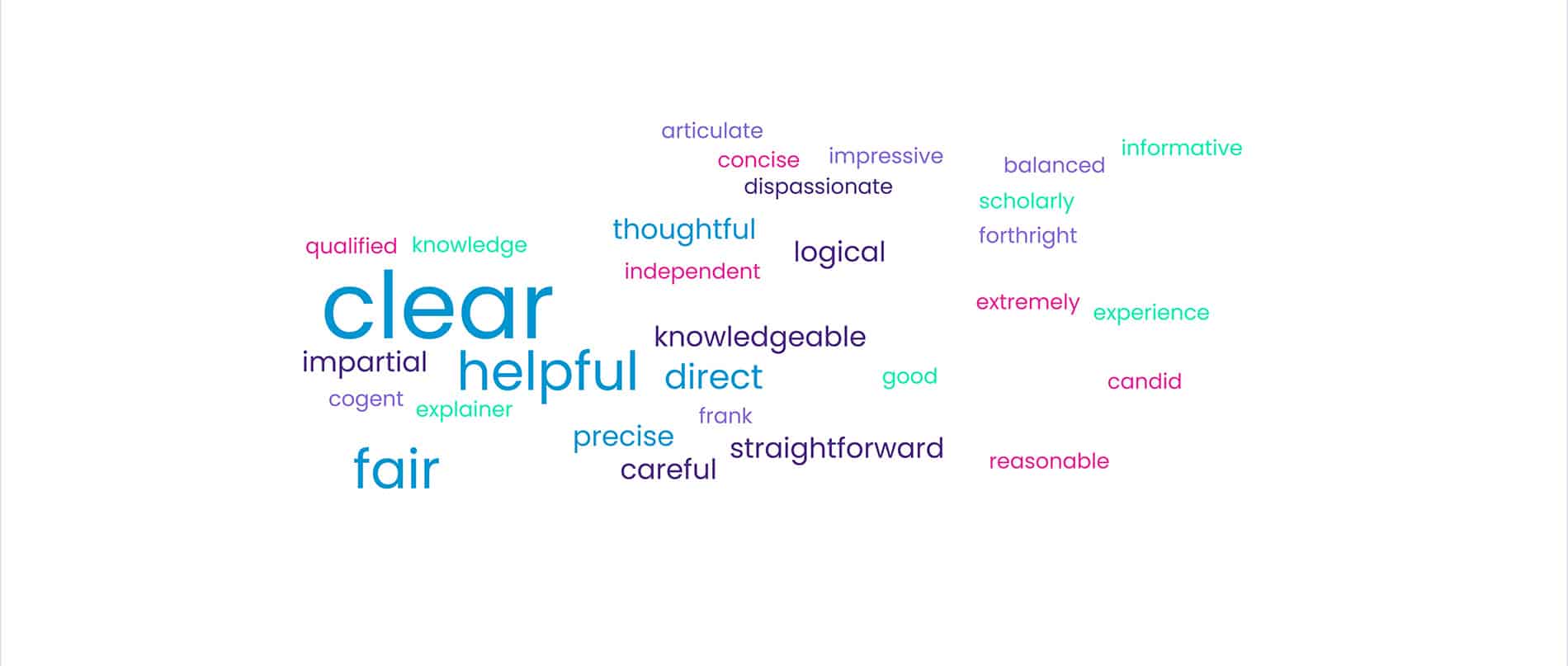
Judges understandably spend more time explaining why they don’t accept an expert’s evidence than praising experts who, from the court’s perspective, are simply doing the job they are supposed to do. Often the only feedback a good expert gets is a few positive words but our word cloud summarising this year’s comments demonstrates that good experts have some very simple things in common. From a judge’s point of view they are clear, helpful and fair. To give some colour to that perhaps obvious statement, here are a few of the more loquacious judicial comments about experts from 2025;

  • This was unquestionably an impressive expert. He had a ready command of the details both of the market at the time and of the issues in this case. He was fair minded and demonstrated the independence that makes experts so valuable to the court, readily recognising criticisms of the Valuation and his own methodology where he considered them to be fair. At times I felt that the Claimant verged on, and indeed strayed into, conducting trial by ambush in the course of the cross examination, presenting him with new material while in the course of giving evidence; he engaged with the new figures presented to him and was able to offer clear, comprehensive answers to the questions put.
  • It is clear that each of the 12 expert witnesses had a wealth of qualifications, experience and/or expertise in their respective disciplines and used their understanding and knowledge to assist the Court. The Court is immensely grateful to them.
  • Whilst she had less experience to give technical evidence on the main issues in this dispute her oral evidence was thoughtful and helpful.  She was at all times mindful of her overriding duties to the court and gave clear answers to the difficult questions put to her.
  • The court greatly benefited from the expertise and thoughtful consideration of two eminent consultant surgeons. It was undoubtedly the right decision to grant permission for their testifying. They were rather different personalities, but each possessed intellect and were articulate, frank and forthright – precisely what the court would expect of high-quality experts. The court is grateful to them both.

Such comments are a reminder that as well as specialist professional skills and qualifications experts need the ability to communicate clearly both in writing and verbally, especially in court. The legal environment is very different from ‘normal’ professional practice so anyone considering acting as an expert needs to understand that environment,  the rules that apply to expert evidence and how to avoid the pitfalls that can lead to a difficult time in court and potentially public criticism from a Judge.

The Academy’s training programme is designed to help already  skilled professionals through the basic foundations to a mock cross-examination to ensure that they are fully prepared. Our training courses are primarily delivered online but we run some face to face courses  in London and Hong Kong. We can also run in-house training for larger consultancies, please contact us for details.

Members receive a 25% discount on training, if you would like to join the Academy please complete our Pre-Application Questionnaire and we will help you identify the appropriate membership level for you. Other benefits of membership include guidance and advice on being an expert, regular member meetings to discuss issues affecting experts and access to specialised PI insurance.

Professional Body Takes Action. Why professional memberships and regulation matter for experts.

Many experts are members of the professional bodies or associations relevant to their specialist field and will benefit from news, information, networking events and so on, as well as the ability to put the relevant letters after their name. Of course these are all helpful aspects of professional membership but from the point of view of the public and the courts a more important, possibly the most important, service a professional body provides  is to ensure that members provide professional and high quality services.


The key role of a professional body’s enforcement process in the justice system is illustrated by Lorimer-Wing v Hashmi. This case had, as the judge commented a fairly remarkable history  but in very brief summary the Defendant lost at a liability hearing and was ordered to purchase shares in a company at a price “to be determined”. There followed a series of applications, appeals and failures by the Defendant to pay costs or provide security for costs, all of which culminated in them being barred from taking any further part in the proceedings.


The quantum hearing duly took place with the judge relying heavily on a quantum report provided by a member of the ICAEW, resulting in a  valuation for the shares of £3.3 million. So not a good result for the (de-barred) Defendant. What follows is best explained by quoting the judge;


“On 10 December 2024 Mr Lorimer-Wing applied for permission to appeal the debarment order. This is the appeal. The application for permission to appeal was rejected on the papers by Leech J on 27 March 2025. Mr Lorimer-Wing applied to renew his application, and that came before Leech J on 20 June 2025. Just before that application was heard, the court received letters from Mr Ashing, the expert, and from a Mr Wiggins, a representative of the Institute of Chartered Accountants of England and Wales (“ICAEW”). The effect of those letters was that Mr Ashing accepted that his expert’s report which ICC Judge Agnello had relied on was flawed, and in particular he accepted that the correct value of the company at the material time was likely to be substantially less than set out in his opinion. Mr Wiggins explained that the ICAEW was involved because of a complaint made to it by Mr Lorimer-Wing against Mr Ashing. The investigation which was conducted by the ICAEW included instructing their own independent valuation, and that valuation expert was firmly of the view that the company had no value at the relevant valuation date. “


In other words  there was no basis for the award that had been made and the order for costs itself might also be unsafe. While couched in careful language the judge was clearly unhappy with the procedural mess that resulted, commenting that “These proceedings need to be brought to a conclusion by getting to the bottom of what happened in the Agnello proceedings, and I do not consider putting any more procedural impediments to a proper resolution on the merits of those issues is desirable. “ Accordingly, the Defendant was no longer de-barred would be allowed to bring in new evidence and amend their grounds of appeal.


While the next chapter in this particular saga may yet play out in court the key message is that professional bodies do matter and their complaints processes have teeth. If a party believes an expert has not acted appropriately for whatever reason there are avenues that can and should be used to challenge them.


Members of the Academy of Experts will be aware that while bodies such as ICAEW are often the first port of call for complaints, we also have a complaints process. The Academy’s code of conduct for experts  was approved by the Master of the Rolls and the disciplinary procedure is conducted, on the few occasions its required, by an independent committee led by a legal practitioner and comprising experienced experts and at least one dispute resolver. While most experts will never need to engage in the process it is an essential service to both the public and the courts. If you need advice on engaging an expert or identifying the appropriate body to contact for advice then please get in touch.

Searching for evidence. A reminder to experts of the need to look thoroughly.

Experts  often have to rely on their clients and instructing solicitors to provide them with the material they need to form opinion. That evidence may be documents, data from an IT system or audio or video recordings and if the evidence you are given is incomplete or distorted in some way your opinions may turn out to be wrong.


The Chief Constable of Northamptonshire Police has recently been found in contempt of court in a case that acts a timely warning to experts of the need to check and check again that you really have all the evidence you need.


A brief summary of the case is that a woman was arrested and charged by police officers but the case against her was then dropped. She was unhappy with the way she had been treated during the arrest and claimed that property had been taken. Cue a series of court cases escalating through the courts and requests under GDPR for access to the video recordings from the police officers’ body worn cameras. Complaints to the ICO were upheld and some footage provided but not all of it and Northants police claimed on multiple occasions that  they had ‘performed standard searches’, had provided all the available material and that any remaining footage had been deleted without any clear explanation of why.


A few days before a final hearing at the Court of Appeal it transpired that when the audit logs for the relevant officers were checked and other, entirely obvious but presumably not ‘standard for Northants police’ searches were carried out the missing video footage did in fact exist, had not been deleted and could be provided without any difficulty.


The lesson for experts is that when a client says they’ve looked for and not found the evidence you expect to see you should treat them like a teenager who claims not to be able to find a missing pair of trainers. Get them to tell you exactly and in annoying detail where they’ve looked, what searches they’ve performed and if humanly possible make them show you what they’ve done. If there’s  really nothing there then there’s no problem, but if you emerge from under your client’s metaphorical bed with a pair of smelly trainers it really is better to know sooner rather than later!


As well as specialist professional skills and qualifications experts need the ability to communicate clearly both in writing and verbally, especially in court. While many consultants and professionals have those skills the legal environment is very different from ‘normal’ professional practice. Anyone considering acting as an expert needs to understand that environment,  the rules that apply to expert evidence and how to avoid the pitfalls that can lead to a difficult time in court and potentially public criticism from a Judge.

The Academy’s training programme is designed to help already  skilled professionals through the basic foundations to a mock cross-examination to ensure that they are fully prepared. Our training courses are primarily delivered online but we run some face to face courses  in London and Hong Kong. We can also run in-house training for larger consultancies, please contact us for details.

Members receive a 25% discount on training, if you would like to join the Academy please complete our Pre-Application Questionnaire and we will help you identify the appropriate membership level for you. Other benefits of membership include guidance and advice on being an expert, regular member meetings to discuss issues affecting experts and access to specialised PI insurance.

3 Unwise Experts. Independence means hearing, seeing and speaking the ‘evil’ in your client’s case

The High Court ruling against Danish tax authority SKAT in a £1.4 billion dividend tax fraud case has been widely reported, not least because the judge concluded that SKAT’s controls on the transactions involved were so flimsy as to represent the equivalent of a ‘help yourself’ sign outside a bank.


Less attention has been given to the judge’s criticisms of the experts who appeared on behalf of the many parties involved. As he put it “ All three experts, in differing ways, did not provide properly balanced written reports”.


Perhaps the clearest example was SKAT’s expert “whose written work was argument rather than expert evidence” showing the dangers of working closely with a client and legal team on complex, long-running litigation. The judge concluded that “he finds it difficult not to think and express himself as an advocate for SKAT’s position. He has, I think, lost detachment from the partisan interests of SKAT” and was unable perhaps to hear any ‘evil’ in his client’s case.


Somewhat less concerning was an expert whose testimony was careful but tended to obscure his views and maximise differences with other experts that were not a pronounced as appeared at first glance.  As the judge observed, “That exposed him to a cross-examination that should have been largely unnecessary to confirm the extent to which, in substance, he agrees with a range of matters on which SKAT relied. “ Fortunately he appears to have dealt with that cross-examination impressively, fairly (with balance), and with an obvious depth of thought and expertise. A better approach might have been to write a report that allowed the parties to see more clearly.


And finally, the third expert’s generally much better approach (once his reports had been edited to remove contentious factual matters that should not have been there!) and thoughtful and fair answers to questions were undermined by his taking a view in the witness box that he had not expressed in writing.  The judge concluded that his interpretation of a key terminology expressed in oral evidence “had not been his view at any material time. It was inconsistent with the views he had expressed in writing, including in his primary expert report in these proceedings, to which he had to proffer alterations when called to give his oral evidence to advance the different view. “  While the case did not turn on this point the judge made it clear that speaking out in this way, because his written views in fact assisted the other side, was not acceptable and did the expert no credit.


The message to experts should not be a surprise, no client’s case is perfect and there are times when your views will not support their case. When that happens it is critical that you make sure your client’s hear you, that the court can see hat your views really area and that when you speak you keep your duty of independence firmly in mind.

Anyone considering acting as an expert needs to understand that environment,  the rules that apply to expert evidence and how to avoid the pitfalls that can lead to a difficult time in court and potentially public criticism from a Judge.

The Academy’s training programme is designed to help already  skilled professionals through the basic foundations to a mock cross-examination to ensure that they are fully prepared. Our training courses are primarily delivered online but we run some face to face courses  in London and Hong Kong. We can also run in-house training for larger consultancies, please contact us for details.

Danger, keep off! The rules are there for a reason.

Most judicial criticism  of experts arises from either ignorance of the basic rules of expert evidence or because experts who understand and have tried to apply the rules have slipped off the straight and narrow  path, usually from a desire to help their clients.

So while judges comments are often direct and colourful they generally accept the understandable human urge to help and temper their criticism accordingly. However, from time to time experts  don’t just slip off the path they deliberately choose to jump off the cliff in pursuit of their client’s interests.

In Marples & Ors v Secretary of State for Education compensation was claimed from the Skills Funding Agency, the amount of which depended on expert evidence from a  forensic accountant.  Concerns were initially raised about involvement of one of the claimant’s, himself an accountant, in the production of a joint statement. Letters, witness statements and some document disclosure followed and it appears that over the course of what must have been a somewhat eventful hearing, to put it mildly, it became clear that the client had been heavily involved in the production of the joint statement.

We recommend that all experts read the judgement which culminated with the following conclusion from the judge;

  1. This is a deliberate, cynical, planned breach of the rules relating to the preparation of expert evidence. It is a very serious breach.
  2. The product of the expert in the shape of his report and the joint report are not independent. They do not represent his objective and unbiased opinion. They represent advocacy on behalf of the claimants, using words put in the expert’s mouth by the claimant. They represent what the claimant wants the expert to say and are not the expert’s opinion at all. This includes contributions on matters on which the expert avowedly knows nothing (such as Star Capital).
  3. I have no confidence in this expert’s ability to act in accordance with his obligations as an expert witness.

I accordingly refuse the claimants permission to rely upon the evidence and reports of the expert.

Not surprisingly given this, and other issues with the factual evidence, the claim was dismissed.

We suspect that no amount of rules or  training can prevent the very few experts and clients who are determined to break the rules but for everyone else we would remind you that anyone considering acting as an expert needs to understand the role. That means knowing  the rules that apply to expert evidence and how to avoid the pitfalls that can lead to a difficult time in court and potentially public criticism from a Judge.

The Academy’s training programme is designed to help already  skilled professionals through the basic foundations to a mock cross-examination to ensure that they are fully prepared. Our training courses are primarily delivered online but we run some face to face courses  in London and Hong Kong. We can also run in-house training for larger consultancies, please contact us for details.

Spanish experts on the run. A UK judge’s analysis of expert evidence from a range of experts.

Insights into expert practice in different jurisdictions can be very helpful, not least because they often show that there are good and bad experts everywhere.  DHV v Motor Insurers’ Bureau was an unusual case about the compensation due to a pedestrian injured by an insured driver in Spain. Various quirks of the law and the claim meant that it was heard in the UK but the judge needed to apply the Spanish Baremo  system (ready-reckoner in English) to assess the size of the claim.

This meant that the judge had to consider the evidence of 8 Spanish experts specifically accident reconstruction, Spanish law, actuarial and medico-legal experts. The results can only be described as mixed bag.

At the top end of the scale the judge praised the Defendant’s actuarial expert as “knowledgeable and also very fair-minded” reaching some conclusions that favoured the Claimant. The Defendant’s accident reconstruction expert was also careful and measured in his evidence, “always at pains to alert the court to the limits of his evidence and expertise and when challenged over a gap in the evidence accepted that he should have covered the specific issue.   Similarly their expert in Spanish law was “aware of his limitations and balanced”.

The Claimant’s actuarial expert was somewhat less useful to the court, having applied a “mix and match” methodology rather than strictly following Baremo and their accident reconstruction expert, while being given credit by the judge for the difficulty of giving evidence through an interpreter, was unimpressive in parts and of little assistance to the court.

The quality of evidence  sadly had yet further to fall. The Claimant’s Spanish law  expert was  “in certain vital respects an unsatisfactory witness” . This expert had copied from a colleague’s report, without citing it, initially denied copying and then excused it as resulting from the use of a ‘central database’ of material. Sadly that excuse was fatally undermined by the presence of details specific to the case that appeared word for word in both reports.

Heading down the scale the Defendant’s medico-legal expert, while “an engaging and affable character “ and eager to try to assist the court, was “at points unbalanced in his conclusions, not motivated by a hostile attitude towards the claimant, but rather an insistent adherence to his opinion being right. There were occasions when he only accepted the conclusions of other experts with reluctance. “

And bringing up the rear his opposite number had not only failed to read both sets of medical reports, something the judge charitably attributed to a misconception, but replicated a significant passage from an article in his report without attributing it.  Rather than simply admitting the error  he compounded it by offering obviously incorrect explanations in oral evidence. While nothing critical turned on the article these issues “caused the court to think carefully about his openness”.

There are many lessons to be learned from this judge’s careful review of the expert evidence, not least that judges are much more interested in facts and careful analysis than they are by  confident presentation and advocacy.  As Dias J put it “This case was not short of advocates; it needed impartial expert advice.”

Established members will be familiar with the Academy’s training courses which include mock cross-examination to ensure that new experts are fully prepared, and would not make the mistakes cited here. If it’s been some time since you attended training it may be worth considering a refresher. For example, many experts rarely give evidence in court so a repeat of ‘Into Court’ might be handy if you have a court appearance looming.

Most of our training courses are now delivered online so your location doesn’t matter and members receive a 25% discount.  We can also run in-house training for larger consultancies, please contact us for details.

Facts or factoids? Experts need to beware facts that don’t add up.

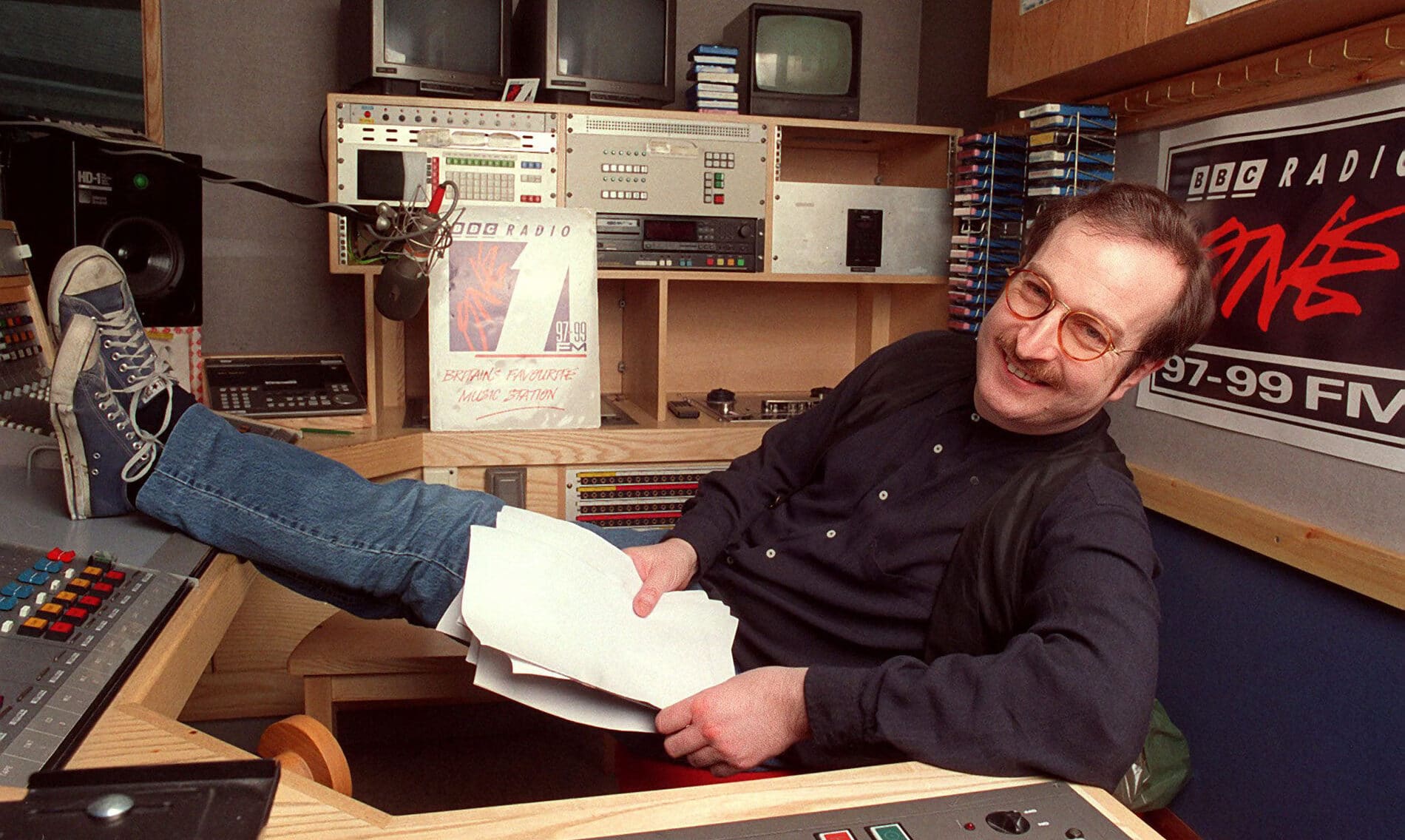
Fans of the late, great Steve Wright will remember the amusing and amazing factoids that peppered his afternoon radio show. But ‘factoid’ also means something that is repeated or believed but isn’t actually a fact.

Experts of course need to make sure they only deal with established facts and make it clear when there are disagreements or doubt over the status of the assumed facts that underlie their evidence.

Two recent cases have pointed up the need for care in this area.  In Toppan Holdings Ltd & Anor v Augusta/Simply , a case involving defects in the design and construction of a care home, expert accountancy and valuation evidence was required. Unfortunately while all gave helpful guidance to the court as the judge commented the Defendant’s expert was “in greater difficulties because of the complete absence of any factual evidence advanced by Simply.  Many parts of his report were based upon assumptions which were speculative and not supported by any factual evidence.” His cause was also not assisted by the lack of any mention of defects in his report. When cross examined, “he agreed he should have considered the defects but could not explain whether it was a deliberate omission or “… whether I just missed this.  I don’t know.”  This was more than somewhat surprising given the case was principally about the impact the defects had on the value and profitability of care home.”

In Ruby Properties v  James Alistair Watt  a dispute about the sale and purchase of a pilot training school the accountancy expert was not provided with data from an account system or the accounts for the company. Instead it was a document prepared in part from an accounts system and partly from witnesses recollections and assumptions and without the original records being disclosed.  Once the witness had conceded that “the spreadsheet was very much his subjective assessment which he had done from “feeling,  rather than mathematically” the accountancy experts evidence was, as the judge put it had “no factual foundation”.

It is clearly difficult for an expert when a client failed to provide the information they need.  An expert in Australia demonstrated that the best way to deal with this issue is to explain the limitations of the evidence and the limitations that places on your report. In that caser the judge concluded that within those limitations the expert “was entitled to express significant concern as to the profitability and financial viability of the entities”  and that “the evidence enables the Court to have confidence in his valuation opinion”.

The moral of these stories is to be wary of incomplete or unsupported facts and make sure that you state any issues or limitations in your report. For advice and guidance on giving expert evidence, including our  Model Form of Expert’s Report and  practical advice and guidance on topics such as GDPR, Joint Statements, privilege and so on see the Academy’s Knowledge Hub.

ure is from The Guardian.

Case commentaries

No stickers for experts – but courts do value fairness and expertise

One of the sad things about being an adult is no-one gives you a gold star or a sticker when you’ve done a good job. Similarly criticism of experts generally gets much more air-time than praise and sometimes the only way to know when experts have done a good job is when a judge simply says ‘I received expert reports from X and Y’ and nothing more.

So it was heartening to see a judge in the family court  take the time to express how challenging the job can be and give credit to an expert for this. In a difficult family case he considered evidence from a CAFCASS expert (CAFCASS is the Children and Family Court Advisory and Support Service which advises the family courts about the welfare of children and what is in their best interests).

The judge thanked the expert sincerely for her help and expertise and noted that “In the court’s experience, CAFCASS find they “cannot do right for doing wrong” – in that each parent will often pick and choose which bits they agree with or take the view that any disagreement from the expert with their case is a personal attack on them or some form of persecution. In the court’s experience of such experts, they are genuine, hardworking, over worked and underappreciated. In the present case the court found the evidence to be both earnest and fair.“

The lengths to which parents sometimes go in criticising experts is illustrated by an Australian case (SSYL and The CEO, National Disability Insurance Agency (NDIS) [2025] ARTA 388 (16 April 2025)) involving a disability assessment. The parents reported the expert to their professional body and accused her of violating “numerous standards and professional behaviour”. They then sought to have the expert’s report disregarded by the court.

Having heard evidence from the expert and witnesses the Tribunal observed that “the entire assessment was recorded and that no issue was raised by the Applicant or his wife at any stage prior to the completion of her report.” They found it appropriate to rely on the expert’s report based on the evident experience, balance and thoughtful approach taken by the expert. As they noted “She was the only expert witness to properly identify and appropriately report on the risk of family violence and to proffer a nuanced explanation for the reduction in the Applicant’s capacity over the last few years. She also cautioned the Tribunal against any dramatic reduction in support for the Applicant. “

Experts working in these, and  other less contentious areas, should be heartened that the courts do value their expertise and fairness and will resist unreasonable personal criticism. Of course all experts have a responsibility to make sure they keep up the high standards the courts expect. If you need help in any aspect of expert work the Academy’s Knowledge Hub contains authoritative guidance from our judicial committee and practical advice on a range of topics. As a member you can also call our Technical Helpline for help and advice on ethical and practical issues from dealing with instructions to getting paid.

Contact Us