

Managing Your Instructing Solicitor: Why Clarity, Realism and Boundaries Matter

Being instructed as an expert witness can be an interesting and fulfilling aspect of professional life, but it’s not without its challenges. One of the most common (and under-discussed) issues experts face is how to manage their instructing solicitors.

It’s easy to assume that once you’re engaged, expectations are fixed and your role is simply to deliver. But in reality, managing your instructing solicitor is a key part of ensuring that what you deliver is useful, compliant, and capable of standing up in court.

Academy Council Member Helen Gregory of Opus Forensic Accounting has helpfully provided her five top tips for how expert witnesses can work most effectively with their instructing solicitors.

1. Be realistic about deadlines — and say no if needed

There’s a temptation to take on every instruction that comes your way, particularly if you’re self-employed and don’t know where the next one is coming from. But accepting unrealistic deadlines can cause problems for all involved. Rushed reports are more likely to contain errors, lack clarity, or fail to meet procedural requirements. And in the worst-case scenario, they can be thrown out by the court entirely.

It’s better to decline a job than to submit something half-baked. Be clear at the outset about what’s feasible and remember to factor in time not just for writing the report, but for reviewing documents, requesting further information, meetings with the solicitor and client, responding to queries, and navigating any surprises.

2. Build in contingency: Something will crop up

In theory, you receive a neat, complete bundle of documents and a clear brief. In practice, things are rarely that tidy. Documents arrive late or in multiple batches, some are missing or out of order, and the questions you need to address will take time to answer.

You need to allow for contingency: time to request clarifications, review additional information, and think critically about what you’re being asked to do. The more flexibility you build in, the more likely you are to produce a report that is robust, complete, and helpful to the court.

3. Understand the limits of your visibility

One key challenge is that, as an expert, you often operate in isolation from the wider case. You may see only a snapshot of the full picture. It’s important to remain focused on your instructed area and resist the temptation to speculate beyond it.

At the same time, remember that lack of context doesn’t remove your duty of care. If documents appear incomplete, if your opinion feels influenced, or if something doesn’t sit right, you must raise it. You are reporting to the court, not acting as an advocate for either party.

4. Deliver bad news where it’s warranted

It’s not always easy to say your client doesn’t have a case. But as an expert witness, you have a duty to give your honest, professional opinion, even if that opinion isn’t what the instructing solicitor wants to hear.

Be aware that some may (consciously or otherwise) attempt to steer your opinion. Stay alert to missing evidence, biased questions, or subtle attempts to frame a narrative. Your integrity and credibility depend on your ability to remain independent and evidence-based.

5. Know the rules and review your report thoroughly

Expert reports must comply with the relevant Civil, Criminal or Family Procedure Rules. That includes formatting, content, and declarations. A technical report that omits the correct statement of truth or includes the wrong version risks being ruled inadmissible.

It’s also essential to re-read what you’ve written. That may sound obvious, but when deadlines loom and multiple drafts are flying around, it’s easy to miss a critical detail. The best option is to ask someone else unconnected to the case to read and cast it, but that may not always be possible so do make time to review your own work with a clear head.  You may be cross-examined on your report, so make sure you’re comfortable defending it.

Final thoughts

Whatever your discipline, acting as an expert means more than just knowing your subject. It requires planning, time management, self-awareness, and the confidence to push back when needed.

Clear communication with instructing solicitors, realistic boundaries, and careful preparation are vital. If in doubt, The Academy of Experts offers training, guidance and support to help navigate the more complex aspects of expert witness work.

Helen is a Partner at Opus Forensic Accounting, part of the Opus Business Advisory Group, and brings over 25 years’ experience in civil and criminal investigations, commercial disputes, and matrimonial matters. A trusted expert witness and active figure in the sector, including roles with The Academy of Experts and the South West Fraud Forum, she recently joined Opus, a national advisory firm with 14 offices, 35 Partners, and specialist divisions spanning restructuring, strategic advisory, forensic accounting, and equity.
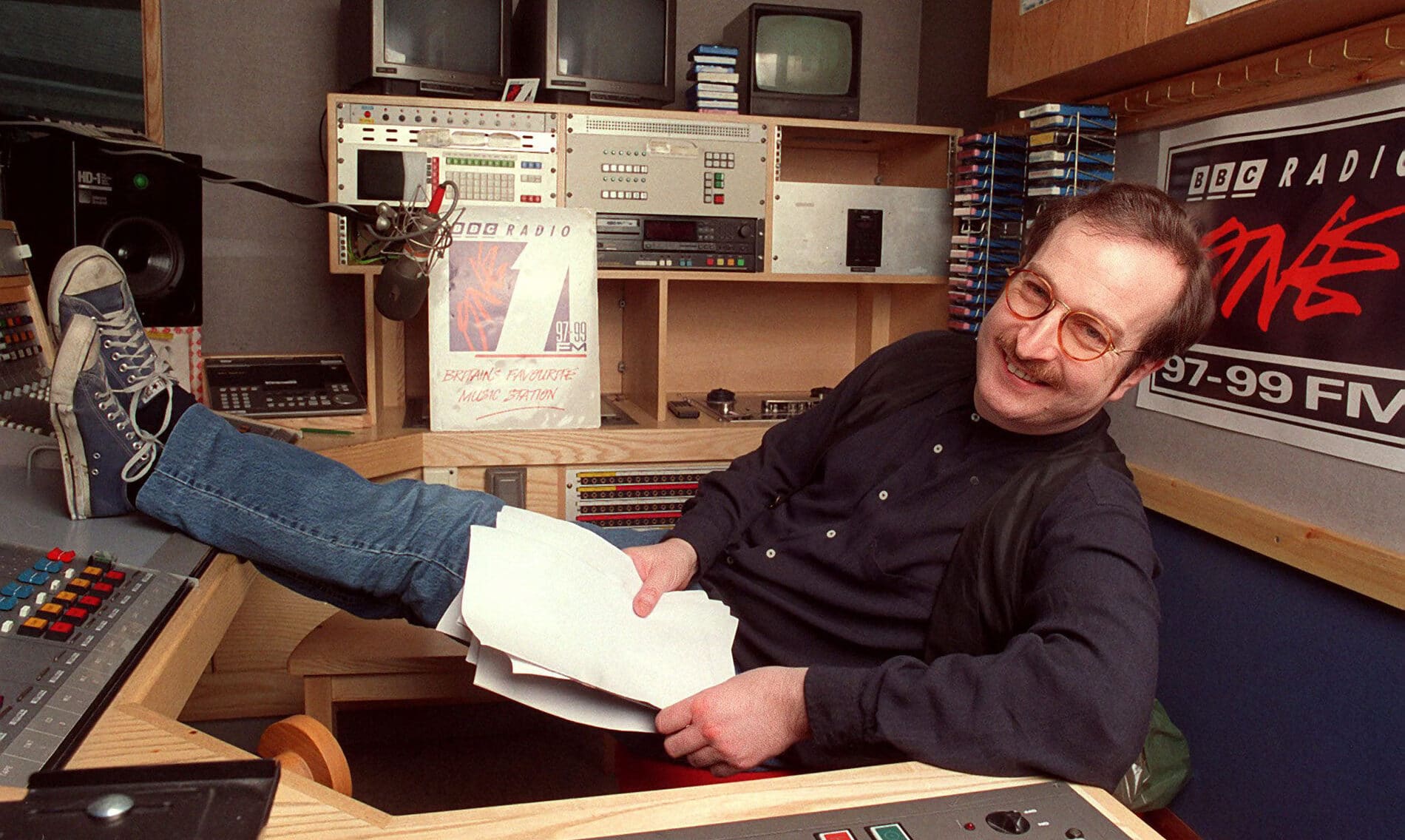

Facts or factoids? Experts need to beware facts that don’t add up.

Fans of the late, great Steve Wright will remember the amusing and amazing factoids that peppered his afternoon radio show. But ‘factoid’ also means something that is repeated or believed but isn’t actually a fact.

Experts of course need to make sure they only deal with established facts and make it clear when there are disagreements or doubt over the status of the assumed facts that underlie their evidence.

Two recent cases have pointed up the need for care in this area.  In Toppan Holdings Ltd & Anor v Augusta/Simply , a case involving defects in the design and construction of a care home, expert accountancy and valuation evidence was required. Unfortunately while all gave helpful guidance to the court as the judge commented the Defendant’s expert was “in greater difficulties because of the complete absence of any factual evidence advanced by Simply.  Many parts of his report were based upon assumptions which were speculative and not supported by any factual evidence.” His cause was also not assisted by the lack of any mention of defects in his report. When cross examined, “he agreed he should have considered the defects but could not explain whether it was a deliberate omission or “… whether I just missed this.  I don’t know.”  This was more than somewhat surprising given the case was principally about the impact the defects had on the value and profitability of care home.”

In Ruby Properties v  James Alistair Watt  a dispute about the sale and purchase of a pilot training school the accountancy expert was not provided with data from an account system or the accounts for the company. Instead it was a document prepared in part from an accounts system and partly from witnesses recollections and assumptions and without the original records being disclosed.  Once the witness had conceded that “the spreadsheet was very much his subjective assessment which he had done from “feeling,  rather than mathematically” the accountancy experts evidence was, as the judge put it had “no factual foundation”.

It is clearly difficult for an expert when a client failed to provide the information they need.  An expert in Australia demonstrated that the best way to deal with this issue is to explain the limitations of the evidence and the limitations that places on your report. In that caser the judge concluded that within those limitations the expert “was entitled to express significant concern as to the profitability and financial viability of the entities”  and that “the evidence enables the Court to have confidence in his valuation opinion”.

The moral of these stories is to be wary of incomplete or unsupported facts and make sure that you state any issues or limitations in your report. For advice and guidance on giving expert evidence, including our  Model Form of Expert’s Report and  practical advice and guidance on topics such as GDPR, Joint Statements, privilege and so on see the Academy’s Knowledge Hub.

ure is from The Guardian.

Case commentaries

Hired gun? How to avoid being seen as an advocate for your client.

Given how  often lawyers and experts complain about encountering hired guns in litigation it sometimes seems that every other expert must be crossing the line from independent, objective opinion into full-blown bias and advocacy for their client.

In reality our adversarial system means that any expert other than a Single Joint Expert will spend a good deal more time with their own client and legal team than the opposition . Your legal team will typically be more interested in picking holes in the other side’s arguments and expert reports than checking that your report is 100% objective so it’s easy to slide, almost unconsciously, into positions that favour your side.

Judges understand this to some extent and  as long as the bias is not too extreme may confine themselves to a wry comment. For example, “Both experts on occasions were over-optimistic in favour of the party who instructed them.” and “both experts at times had seemed, at least in their reports, to have adopted a rather more critically rigorous approach to assessing the quantum of the other parties’ claims than when reviewing their own client’s.”

But expert evidence is very important to the courts and experts are rightly held to very high standards, so a good starting point to is to try to avoid even such mild criticism. The simplest way to do this is to read your own report  as though you were the other side’s expert. Are there gaps in your reasoning? Is there evidence  that might contradict your conclusions? If you’ve discounted witness evidence or documents, why have you done that? Is it justified?  Have you set too high or too low a standard for professional conduct in your analysis?

The key question is does this report help the judge to understand the case and form a truly objective view of the expert issues. Then when you arrive in court you will be confident that your report will stand up to even the most difficult cross-examination.  In a recent case, for example,  a valuation expert who the judge considered to be unquestionably an impressive expert was subjected to trial by ambush while giving evidence. Fortunately his expertise and independence mean that when “presented with new material while in the course of giving evidence; he engaged with the new figures presented to him and was able to offer clear, comprehensive answers to the questions put

By contrast in a clinical negligence case an expert had based all her opinions and written her report entirely based on fact that was not stated in a witness statement and had been completely undermined during the trial. The judge commented that she found this very concerning, “as it appeared to me that the expert was:

i) holding firmly to an opinion which was based on one perceived fact which she elicited from the Second Defendant’s witness statement (that he had the diagnosed pyelonephritis in mind at the index consultation, albeit that his witness statement was clear at the start that he had no recollection of the Claimant at all), even when the basis of that perceived fact had been fatally undermined;

ii) trespassing on the judicial function to find, and rely on as a fact (or as her belief) that he was considering pyelonephritis in the index consultation; and

iii) seeking to advocate on behalf of the Second Defendant, thus undermining her own independence. “


Unsurprisingly the other expert’s evidence was preferred, something that  could easily have been avoided by a careful and considered review of the report and the evidence by the expert and her client’s legal team.


The Academy’s Judicial Committee publishes the authoritative guidance for experts so you can be sure that you are adopting best practice. This includes for example the Model Form of Expert’s Report and Guidance Notes on Meetings of Experts, Contingency Fees & Remote Evidence. We also provide practical advice and guidance on topics such as GDPR, Joint Statements, privilege and so on which is available at no charge to members in the Academy’s Knowledge Hub.

Our image is from GOG.com

Case commentaries

Mr Large in charge? How contracts deal with time for delivery.

Those of you with children or grandchildren will know that in these brilliant stories by Jill Murphy, Mr Large is very definitely not ‘in charge’. Which is a helpful way of understanding that when lawyers talk about time being ‘at large’ they don’t mean each hour has somehow got bigger, they mean that a contract doesn’t have any dates specified for delivery.

Time can be at large from the beginning, so if you hire a builder but don’t have a deadline in the contract he isn’t obliged to finish the work by a particular date, only within a reasonable time (whatever that might be). The opposite situation, where time is ‘of the essence’ means there is a contractual deadline and the supplier has promised to meet it. There may be all kinds of reasons why they can’t and many construction and IT disputes revolve around the many ways a client can be said to have slowed progress but fundamentally the deadlines (or milestones) matter.

In extreme scenarios the behaviour of a client may mean that all deadlines have been thrown out of the window, metaphorically speaking, so that time has become ‘at large’ but identifying whether that’s happened and what the consequences are can be complex. If you’re not sure what the position is in a dispute where you’re acting as an expert then you’ll need to discuss with your legal team before expressing any opinions on the subject.

For more information and training on the role of the expert see https://academyofexperts.org/events/


It was this big, really! Exaggeration has no place in expert evidence.

No sooner have we posted about experts doing their job efficiently, professionally and objectively than along come two judgements where the experts involved have very definitely not come up to scratch. Both experts were guilty of expanding and exaggerating their opinions to try to benefit of their client’s case.


In Morriss v London Borough of Hillingdon the cause of a motorbike accident was said by one expert to be the “the most dangerous site on a distributor road he had seen in his 55 years’ experience.”. This was a risky position to take given he’d not been able to examine the relevant stretches of road as they were at the time of the accident. The judge conclude that his evidence was “inappropriately partisan and exaggerated: the evidence concerning the collision site demonstrably showed it was not the extremely dangerous site that he characterised it to be, not least that there had never been a motorcycle accident there before: “


In Freeman & Ors v Home Farm Ellingham a planning expert took things even further. Not only did he give evidence outside the pleaded issues, which revolved around a loss of value in a plot of land,  he generated a set of plans for a development that had never been contemplated, orchestrating, as the judge explained, the production of “what appears to be factual evidence, but that evidence was entirely self-generated by him, and his firm.” That somewhat cavalier approach may explain why in court he appears to have found it difficult to accept instructions from the judge, who records that he “insisted on answering questions that he had himself posed even when asked by the court not to.” and on one occasion ignored an instruction from  the judge not to elaborate on what should have been a simple yes or no answer.


In the motorbike case the evidence of an expert with a great deal of experience was in the end valueless and the planning experts evidence was ruled inadmissible (or alternatively given no weight). The moral for lawyers and clients is that expert opinions that fall too heavily on your side should be related with suspicion, if they are not credible it will be obvious in court and end costing you money and very probably your case.

Case commentaries

Once more unto the breach dear friends? How do lawyers classify problems in a contract?

Once more unto the breach dear friends? That’s not a phrase  you’ll hear often in normal life but lawyers, and by extension experts,  spend a lot of time talking about breaches. Of course they don’t mean holes in the walls of a besieged city as Henry V did, they’re referring to the many and various ways a client can be said to have broken the rules set out in a contract.

Experts are often called upon to identify how bad a breach is so its worth being aware of the main phrases that are used;

Minor breaches are fairly obvious, the term refers to smaller breaches that only affect part of the goods or services whereas material breaches are much more serious and involve failure to fulfil an important part of the contract. They can result in serious consequences for the breaching party, though so you’ll need to discuss with your legal team what the definition of ‘material breach’ is for a particular contract before expressing any opinions on the subject.

At the extreme end a party can be in repudiatory breach if they are deemed to have walked away from or refused to perform the contract. If that happens the other party is entitled to stop performing their end of the bargain, whether that’s paying for services or doing their own part of the job. An example would be a builder  walking off a job and refusing to work, though we’d be interested to hear about real world examples from members!

For more information and training on the role of the expert see https://academyofexperts.org/events/

Our picture is of course from the BBC’s Hollow Crown version of Henry V starring Tom Hiddlestone.


Only common sense? Experts should not provide unecessary evidence on common sense issues

Only common sense? Now may not be the best time to refer to Thomas Paine’s advice to Americans that they should seek independence from Britain, but a keen understanding of what common sense means is important for an expert.

It’s trite to say that experts are there to assist the court on matters within their expertise but it tends to irritate judges if experts provide opinions that tell them what they already know. If you’re being asked to give opinions about matters that are really common sense it’s important to stop and consider if this is really necessary.

In some recent cases a good deal of time, and client’s money, seems to have been spent on expert evidence that really wasn’t needed. As Meade J observed in a patent case involving Motorola and Ericsson, “The experts gave their evidence very fairly and it was not submitted to the contrary. However, with a few exceptions, and this is not the fault of the experts themselves, I found the expert evidence unhelpful and a waste of time. For example, questions were asked to establish that companies in this field like certainty if they can get it, and that patent injunctions are bad for handset manufacturers. I did not need experts to tell me this. “

Similarly in an inheritance tax hearing the Tribunal considered that expert advice on the running of a property business did not assist them, “this is not an area where particular specialist expertise and experience is required to understand the evidence given by those involved in the business.”

Experts and lawyers should take care to avoid wasting time in this way and experts in particular should remember that an irritated judge is unlikely to be of benefit to them or their client.

I’m late, I’m late? A rushed report causes problems for experts, lawyers and their clients.

Litigation deadlines are unforgiving and a common gripe among experts is being given instructions too late, with not enough time to do the job properly. The difficulty of course is that we all want to help our client and instructing solicitors, which makes it hard to turn down jobs at short notice.

A recent case (MVL Properties (2017) Ltd v The Leadmill Ltd) should highlight to lawyers how they risk jeopardising their client’s case by last minute instructions. Two experts gave evidence on the costs to refurbish and re-equip a nightclub and music venue, but one had clearly not had time to do a thorough job.

As the judge explained “He very candidly said that his original report was not his best work because it was rushed: he was told at 11am that his final report was required by 4pm. I note that the report was produced after the time specified by the court and only admitted in evidence as a result of an application for relief from sanctions. I do not suggest that Mr Sullivan was responsible for that time pressure: but its existence is apparent from his report.“

Unsurprisingly, the more coherent report of his opposite number was largely preferred. The moral of the tale for lawyers is try to give your experts time to do their job and to experts, think very carefully before accepting ‘urgent’ instructions, you’re the one who will have to explain the results!

Our picture is from disneyclips.com


Too bullish to ignore an expert?

Too bullish to ignore an expert? A cautionary tale from a  costs hearing that clients ignore expert’s opinions at their peril. This was a fairly common story in the IT world, the claimant tried to sell some software to the defendant providing information, demonstrations and (allegedly) the source code. They weren’t successful and some time later the claimant noticed their putative client announcing they were using software that to them seemed very similar, put two and two together and came up with a claim for copyright infringement.

The case has a long and convoluted history but importantly started off as a criminal case in Spain where a court-appointed expert looked at both sets of code and described the software “as operating in a different manner with different programming language and different architecture” and that the allegedly infringing software “was so inferior that it was not created by copying”.

Undeterred the claimant moved to the English courts and pursued various IPR claims but ultimately once their own expert had reviewed the code they discontinued the claim. Which of course meant they were liable for the Defendant’s costs in what Chief Master Shuman described as ‘heavyweight, highly costly commercial litigation’. In a final throw of the dice  they attempted to overturn the usual cost regime by arguing that the Defendant had unnecessarily protracted the litigation. Dismissing the Claimant’s arguments the judge effectively concluded that things had been protracted by the Claimant’s own desire for 100% certainty that their source code had not been copied with a sub-text, though not explicitly stated, that really they should have taken proper note of a clear statement by the Spanish expert that meant their claim was very, very likely to fail.

https://www.bailii.org/cgi-bin/format.cgi?doc=/ew/cases/EWHC/Ch/2024/3285.html&query=(title:(+trappit+))

Trappit SA & Ors v GBT Travel Services UK Ltd [2024] EWHC 3285 (Ch) (18 December 2024)


Contact Us