

Professional Body Takes Action. Why professional memberships and regulation matter for experts.

Many experts are members of the professional bodies or associations relevant to their specialist field and will benefit from news, information, networking events and so on, as well as the ability to put the relevant letters after their name. Of course these are all helpful aspects of professional membership but from the point of view of the public and the courts a more important, possibly the most important, service a professional body provides  is to ensure that members provide professional and high quality services.


The key role of a professional body’s enforcement process in the justice system is illustrated by Lorimer-Wing v Hashmi. This case had, as the judge commented a fairly remarkable history  but in very brief summary the Defendant lost at a liability hearing and was ordered to purchase shares in a company at a price “to be determined”. There followed a series of applications, appeals and failures by the Defendant to pay costs or provide security for costs, all of which culminated in them being barred from taking any further part in the proceedings.


The quantum hearing duly took place with the judge relying heavily on a quantum report provided by a member of the ICAEW, resulting in a  valuation for the shares of £3.3 million. So not a good result for the (de-barred) Defendant. What follows is best explained by quoting the judge;


“On 10 December 2024 Mr Lorimer-Wing applied for permission to appeal the debarment order. This is the appeal. The application for permission to appeal was rejected on the papers by Leech J on 27 March 2025. Mr Lorimer-Wing applied to renew his application, and that came before Leech J on 20 June 2025. Just before that application was heard, the court received letters from Mr Ashing, the expert, and from a Mr Wiggins, a representative of the Institute of Chartered Accountants of England and Wales (“ICAEW”). The effect of those letters was that Mr Ashing accepted that his expert’s report which ICC Judge Agnello had relied on was flawed, and in particular he accepted that the correct value of the company at the material time was likely to be substantially less than set out in his opinion. Mr Wiggins explained that the ICAEW was involved because of a complaint made to it by Mr Lorimer-Wing against Mr Ashing. The investigation which was conducted by the ICAEW included instructing their own independent valuation, and that valuation expert was firmly of the view that the company had no value at the relevant valuation date. “


In other words  there was no basis for the award that had been made and the order for costs itself might also be unsafe. While couched in careful language the judge was clearly unhappy with the procedural mess that resulted, commenting that “These proceedings need to be brought to a conclusion by getting to the bottom of what happened in the Agnello proceedings, and I do not consider putting any more procedural impediments to a proper resolution on the merits of those issues is desirable. “ Accordingly, the Defendant was no longer de-barred would be allowed to bring in new evidence and amend their grounds of appeal.


While the next chapter in this particular saga may yet play out in court the key message is that professional bodies do matter and their complaints processes have teeth. If a party believes an expert has not acted appropriately for whatever reason there are avenues that can and should be used to challenge them.


Members of the Academy of Experts will be aware that while bodies such as ICAEW are often the first port of call for complaints, we also have a complaints process. The Academy’s code of conduct for experts  was approved by the Master of the Rolls and the disciplinary procedure is conducted, on the few occasions its required, by an independent committee led by a legal practitioner and comprising experienced experts and at least one dispute resolver. While most experts will never need to engage in the process it is an essential service to both the public and the courts. If you need advice on engaging an expert or identifying the appropriate body to contact for advice then please get in touch.
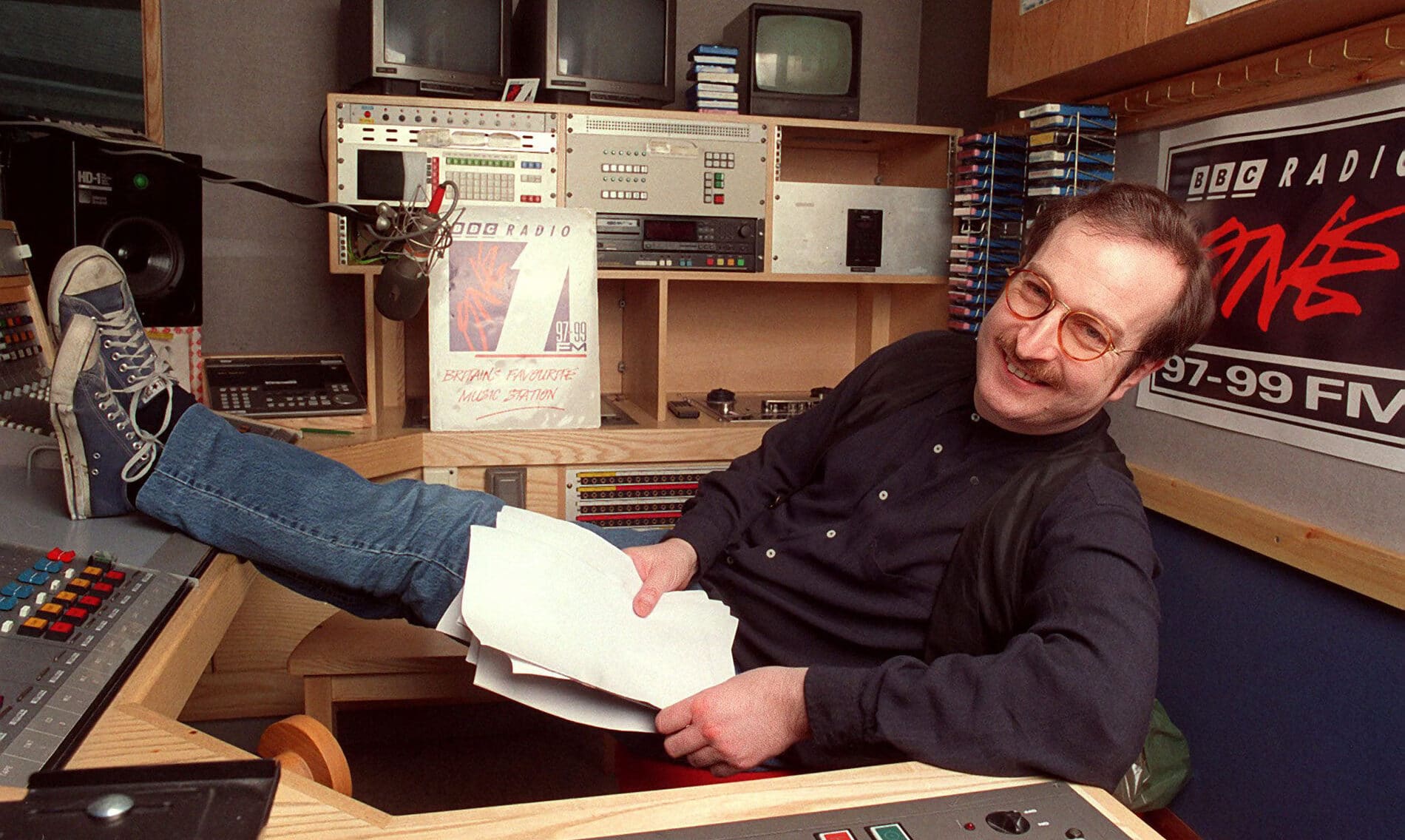

Facts or factoids? Experts need to beware facts that don’t add up.

Fans of the late, great Steve Wright will remember the amusing and amazing factoids that peppered his afternoon radio show. But ‘factoid’ also means something that is repeated or believed but isn’t actually a fact.

Experts of course need to make sure they only deal with established facts and make it clear when there are disagreements or doubt over the status of the assumed facts that underlie their evidence.

Two recent cases have pointed up the need for care in this area.  In Toppan Holdings Ltd & Anor v Augusta/Simply , a case involving defects in the design and construction of a care home, expert accountancy and valuation evidence was required. Unfortunately while all gave helpful guidance to the court as the judge commented the Defendant’s expert was “in greater difficulties because of the complete absence of any factual evidence advanced by Simply.  Many parts of his report were based upon assumptions which were speculative and not supported by any factual evidence.” His cause was also not assisted by the lack of any mention of defects in his report. When cross examined, “he agreed he should have considered the defects but could not explain whether it was a deliberate omission or “… whether I just missed this.  I don’t know.”  This was more than somewhat surprising given the case was principally about the impact the defects had on the value and profitability of care home.”

In Ruby Properties v  James Alistair Watt  a dispute about the sale and purchase of a pilot training school the accountancy expert was not provided with data from an account system or the accounts for the company. Instead it was a document prepared in part from an accounts system and partly from witnesses recollections and assumptions and without the original records being disclosed.  Once the witness had conceded that “the spreadsheet was very much his subjective assessment which he had done from “feeling,  rather than mathematically” the accountancy experts evidence was, as the judge put it had “no factual foundation”.

It is clearly difficult for an expert when a client failed to provide the information they need.  An expert in Australia demonstrated that the best way to deal with this issue is to explain the limitations of the evidence and the limitations that places on your report. In that caser the judge concluded that within those limitations the expert “was entitled to express significant concern as to the profitability and financial viability of the entities”  and that “the evidence enables the Court to have confidence in his valuation opinion”.

The moral of these stories is to be wary of incomplete or unsupported facts and make sure that you state any issues or limitations in your report. For advice and guidance on giving expert evidence, including our  Model Form of Expert’s Report and  practical advice and guidance on topics such as GDPR, Joint Statements, privilege and so on see the Academy’s Knowledge Hub.

ure is from The Guardian.

Case commentaries

Hired gun? How to avoid being seen as an advocate for your client.

Given how  often lawyers and experts complain about encountering hired guns in litigation it sometimes seems that every other expert must be crossing the line from independent, objective opinion into full-blown bias and advocacy for their client.

In reality our adversarial system means that any expert other than a Single Joint Expert will spend a good deal more time with their own client and legal team than the opposition . Your legal team will typically be more interested in picking holes in the other side’s arguments and expert reports than checking that your report is 100% objective so it’s easy to slide, almost unconsciously, into positions that favour your side.

Judges understand this to some extent and  as long as the bias is not too extreme may confine themselves to a wry comment. For example, “Both experts on occasions were over-optimistic in favour of the party who instructed them.” and “both experts at times had seemed, at least in their reports, to have adopted a rather more critically rigorous approach to assessing the quantum of the other parties’ claims than when reviewing their own client’s.”

But expert evidence is very important to the courts and experts are rightly held to very high standards, so a good starting point to is to try to avoid even such mild criticism. The simplest way to do this is to read your own report  as though you were the other side’s expert. Are there gaps in your reasoning? Is there evidence  that might contradict your conclusions? If you’ve discounted witness evidence or documents, why have you done that? Is it justified?  Have you set too high or too low a standard for professional conduct in your analysis?

The key question is does this report help the judge to understand the case and form a truly objective view of the expert issues. Then when you arrive in court you will be confident that your report will stand up to even the most difficult cross-examination.  In a recent case, for example,  a valuation expert who the judge considered to be unquestionably an impressive expert was subjected to trial by ambush while giving evidence. Fortunately his expertise and independence mean that when “presented with new material while in the course of giving evidence; he engaged with the new figures presented to him and was able to offer clear, comprehensive answers to the questions put

By contrast in a clinical negligence case an expert had based all her opinions and written her report entirely based on fact that was not stated in a witness statement and had been completely undermined during the trial. The judge commented that she found this very concerning, “as it appeared to me that the expert was:

i) holding firmly to an opinion which was based on one perceived fact which she elicited from the Second Defendant’s witness statement (that he had the diagnosed pyelonephritis in mind at the index consultation, albeit that his witness statement was clear at the start that he had no recollection of the Claimant at all), even when the basis of that perceived fact had been fatally undermined;

ii) trespassing on the judicial function to find, and rely on as a fact (or as her belief) that he was considering pyelonephritis in the index consultation; and

iii) seeking to advocate on behalf of the Second Defendant, thus undermining her own independence. “


Unsurprisingly the other expert’s evidence was preferred, something that  could easily have been avoided by a careful and considered review of the report and the evidence by the expert and her client’s legal team.


The Academy’s Judicial Committee publishes the authoritative guidance for experts so you can be sure that you are adopting best practice. This includes for example the Model Form of Expert’s Report and Guidance Notes on Meetings of Experts, Contingency Fees & Remote Evidence. We also provide practical advice and guidance on topics such as GDPR, Joint Statements, privilege and so on which is available at no charge to members in the Academy’s Knowledge Hub.

Our image is from GOG.com

Case commentaries

Play fair! The importance of providing opposing experts with a level playing field.

Having extolled the virtues of experts a few weeks ago we have to return to a more critical tone this week. Inspired Education Online Ltd v Crombie was a dispute about the sale of a company that hit the headlines because of the rather lurid ‘banter’ exchanged (internally only) by staff. According to the Claimant this seriously reduced the value of the company and they wanted a substantial sum of money back. That necessitated  valuations of the “warranty false” value by experts, who had to estimate how much it would be worth if said emails became public knowledge and caused scandal.


Unfortunately the experts used fundamentally different methodologies leaving the court, as the judge commented “in the position of having to determine which of the experts is more credible – there is really no middle ground.”


She concluded, after a lengthy review, that the evidence of the Claimants expert had been fatally undermined by a range of issues, starting with instructions that made the valuation unrealistic, reasoning that was “alarmingly thin” and placing reliance on witness evidence that was obviously outside the witnesses’ knowledge.


However, a particular issue that will raise the hackles of other experts, as well as judges, was a failure to provide material that contributed to his report meaning that the other expert had no opportunity to consider it.


A section of his expert report covering the risks a company in the educations sector would be exposed to was based in part on information acquired from colleagues within his practice. However, as the judge commented said; “He did not provide any details of the “colleagues” he had sought information from, the transactions with which those colleagues had been concerned or the information he had received from them. He did not attempt to explain which aspects of his report had been influenced by these “internal enquiries” or whether his views on particular “risks” had been affected by them. He also did not appear to understand that this approach was quite obviously inconsistent with his duties as an expert and his expert’s declaration. He admitted that he had not shared the information derived from these internal enquiries with the Defendant’s expert because he did not regard the content of the information to be “controversial”, thereby showing a surprising ignorance of the importance of experts operating on a level playing field.”


It is easy to forget sometimes that other experts are colleagues to be respected rather than enemies to be overcome, especially if they hold radically different views. But the rules are there to make sure that both sides have a fair chance and it’s an important aspect of the expert role to at least make sure that you opposite number has access to all the information you have.  Perhaps the best approach whenever you decide to include or exclude something is to stop and ask yourself what you would need to see if you were on the other side and then act accordingly.


It may also be worth meeting up with other experts more often to remind yourself that we’re all on the same side. The Academy holds regular member meetings and social events for just that purpose including our President’s Dinner and taking part in the London Legal Walk.

Expert or not expert? Spot the difference?

It’s easy enough to define the role of an expert in court but given how often parties put forward ‘expert’ evidence that’s ruled out or discounted  we thought a list of recent cases involving ‘non-expert experts’ might be helpful to lawyers and clients alike. So here’s a list of the tip 5 give aways that the evidence involved is not in fact expert evidence;


  1. The expert isn’t an expert at all. In a case about the (incorrect) seizure of poppy heads by Border Force the Claimant tried to serve an analysis of the business loss written by his son. The judge concluded he had no relevant expertise, was not independent and there was already agreed expert evidence on the subject and refused permission to use it.


  1. The expert is the wrong kind of expert. In a case about psychological difficulties suffered as a result of a lack of Covid precautions the expertise required was about the medical foreseeability of psychological injury. The expert did not have, or profess to have, such expertise and their ‘general awareness of health and safety guidance’ simply wasn’t good enough.


  1. The expert doesn’t follow the rules. Many people have professional expertise but to give evidence in court they need to be aware of, and follow, the rules. In a case involving a Defendant’s failure to cooperate with a medical examination his GP gave rather colourful evidence about the process in a report that claimed to be compliant with Part 35. However, the GP concerned said that although he’d read Part 35 he hadn’t complied with it and had not referred to his letter of instruction. Unsurprisingly his evidence carried very little weight.


  1. The expert issue isn’t relevant. While pleadings can and do change ultimately the courts have to decide case on the pleaded issues. In an insolvency case an application to allow expert evidence on business valuation and restructuring was refused for “the simple reason the evidence will not go to any pleaded issue in the claim”.


  1. The expert is a judge! And finally, the Court of Appeal recently overturned a ruling where the judge had preferred his own personal ie non-expert view to that of an expert who had given uncontroverted evidence on the impact of the 1982 Hyde Park bombings on the daughter of one of the victims.

So to summarise, for expert evidence to be accepted it must be from an actual expert, with the correct expertise, by an expert who follows the rules and covers issues in front of the court and not from a judge. If you’re looking for a proper, qualified expert then TAE’s expert directory is the place to find one!

Case commentaries

Can you be too expert?

It’s fairly common for experts to be criticised for having exceeded their expertise, not so common for them to be regarded as ‘too expert’. In a recent case involving the valuation of a hotel by an independent expert surveyor the Defendant’s selected an expert witness who reflected their own general expertise but the Claimant (strictly the Pursuer as this was in Scotland) chose an expert with specific and extensive knowledge of the hotel sector.

Unwisely the less experienced expert chose to critique his opposite number’s valuation but as the judge remarked “When challenged, Mr Murphy accepted that, notwithstanding what he had put in his supplementary report, he could not properly criticise Mr Chess’ methodology. Rather to my surprise, at the end of this passage of questioning when it was put to Mr Murphy that what he had done was to “whack out £1.2 million to keep the score down”, his response was “Fair point”.

The judge not surprisingly accepted the more experienced expert’s valuation, confirming that more expertise rather than less is definitely the better option. We’ll leave it you to decide which expert in that story had been too clever for their own good.

Dale House Developments LTD against Brian C Ronnie and Ryden LLP (Court of Session) [2024] CSOH 99 (06 November 2024)


Contact Us