Original publication date not recorded.
Key points
- Specialist tribunals may reject expert opinion but must give the expert an opportunity to answer material concerns; Reasons for discounting expert evidence must be adequate; Other evidence did not necessarily contradict the educational psychologist; Decision set aside and remitted for reconsideration
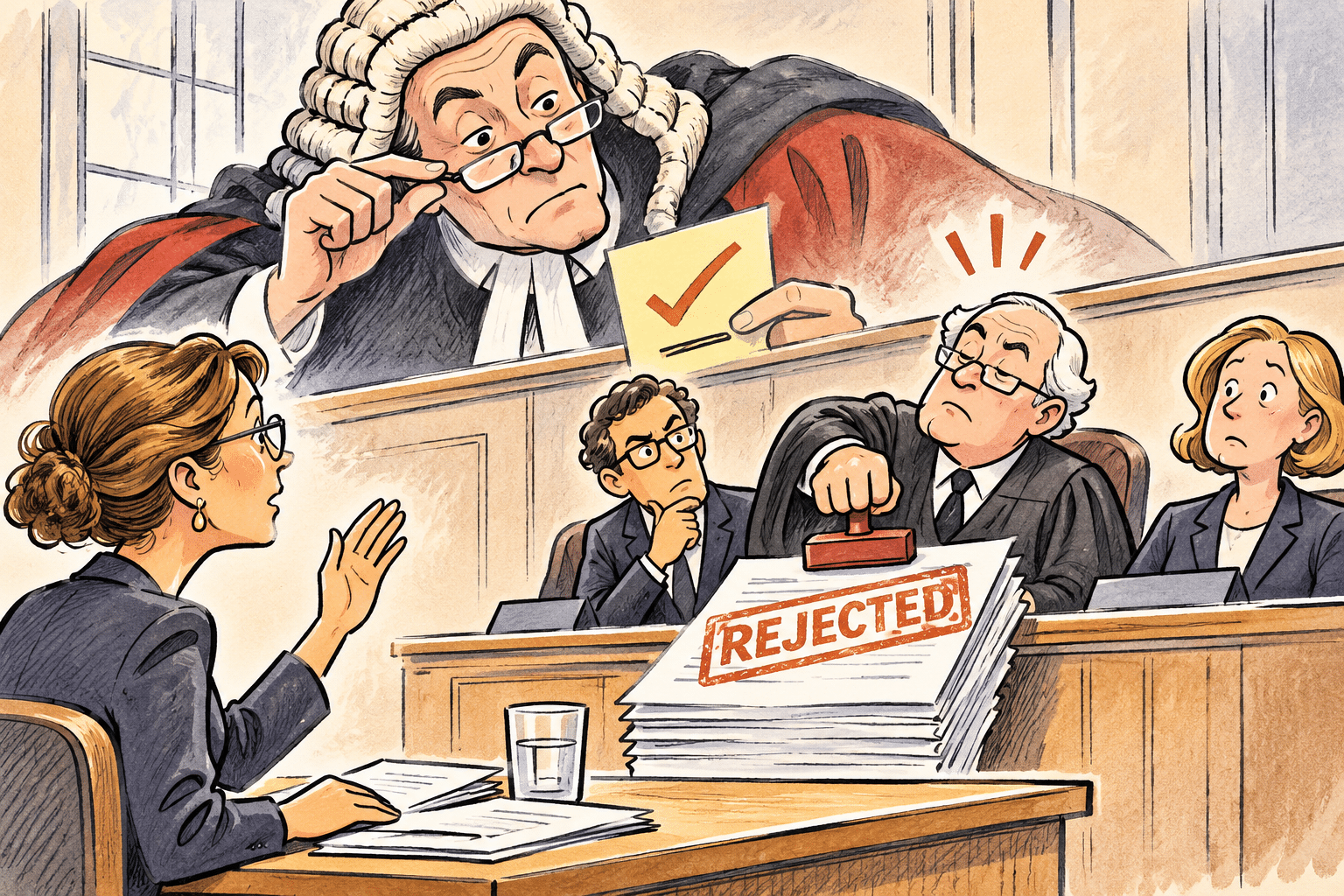
Can a tribunal reject an expert’s evidence without first giving the expert a chance to address its concerns? In Swansea City and County Council v DE [2026] UKUT 398 (AAC), the Upper Tribunal held that the Education Tribunal for Wales had not dealt fairly with the evidence of an educational psychologist. Its decision was set aside and remitted for reconsideration.
Background
The dispute concerned an individual development plan for a 14-year-old child with additional learning needs who had experienced serious difficulties attending mainstream school. The Council proposed additional learning provision directed towards a supported return to mainstream education. The child’s parent sought online education instead.
Dr Rachel Jones, an educational psychologist, prepared reports and gave oral evidence. Her view was that, with suitable support, a return to full-time mainstream schooling was achievable. Her evidence was the only expert evidence directed specifically to whether provision in school was inappropriate under section 53 of the Additional Learning Needs and Education Tribunal (Wales) Act 2018.
Why the first tribunal rejected the evidence
The Education Tribunal for Wales described Dr Jones’s report as being of little use and attached little weight to it. It criticised her for insufficient engagement with the child’s very limited attendance at previous schools, for not consulting or observing certain teachers, tutors and other professionals, and for not sufficiently connecting the child’s diagnoses and reported difficulties with his ability to attend school. It was also concerned that face-to-face tuition was suggested as part of the return-to-school process despite previous attempts having failed.
What the Upper Tribunal decided
The Upper Tribunal accepted that a specialist tribunal is entitled to reject an expert’s opinion, including where it has its own relevant expertise. But where it proposes to reject that opinion, it must identify its concerns, allow the expert and parties a fair opportunity to address them and give adequate reasons for preferring a different conclusion.
Some of the criticisms relied upon in the original decision had not been put to Dr Jones. The Education Tribunal had not established whether she had considered all the material it thought was missing or given her an opportunity to explain her approach. Its reasons also failed properly to explain why the directly relevant expert evidence was rejected in favour of other material that did not necessarily contradict it. The Upper Tribunal held that this was a material error of law.
Why it matters for experts
An expert’s opinion is not binding on the court or tribunal. However, disagreement with an expert must still be approached fairly and explained. Where a decision-maker believes that an expert has overlooked evidence or adopted a questionable assumption, those concerns should ordinarily be put to the expert so that they can respond. For experts, the case also illustrates the value of making clear what information was considered, what could not be assessed directly and why the resulting conclusions remain justified.
The Council’s appeal was allowed. The original decision was set aside and the case remitted to the Education Tribunal for Wales for a fresh hearing before a differently constituted panel.
Decision: Swansea City and County Council v DE [2026] UKUT 398 (AAC), Lady Poole and Sir Gary Hickinbottom, 19 October 2026. Relevant discussion includes paragraphs 15, 23 and 27–31.
Articles reflect the law and practice at the time of original publication, except where a dated update is shown. Subsequent developments may affect their relevance or accuracy. They are provided for general information and do not constitute legal or professional advice. Obtain appropriate advice on your particular circumstances. Full disclaimer.